Meta Description: Discover how micro-coaxial cables enhance aircraft navigation systems, offering superior signal integrity, EMI shielding, and lightweight solutions for avionics wiring.
Introduction Aircraft navigation systems rely on precision, reliability, and durability. As aviation technology evolves, the demand for advanced avionics wiring solutions grows. Micro-coaxial cables have emerged as a critical component in modern aircraft navigation systems, addressing challenges like electromagnetic interference (EMI), signal loss, and weight constraints. This article explores why micro-coaxial cables are essential for avionics wiring, their benefits, and best practices for integration.
1. Why Micro-Coaxial Cables Are Ideal for Avionics Wiring
Aircraft navigation systems require uninterrupted communication between sensors, GPS units, radar, and cockpit displays. Micro-coaxial cables excel in this environment due to their unique properties:
Superior Signal Integrity: Micro-coaxial cables minimize signal attenuation, ensuring high-frequency signals (e.g., GPS, radar data) remain stable over long distances. This is critical for real-time navigation accuracy.
EMI/RFI Shielding: Aircraft environments are saturated with electromagnetic noise from engines, radios, and other electronics. The shielded design of micro-coaxial cables prevents interference, safeguarding sensitive avionics data.
Lightweight and Space-Saving: Traditional coaxial cables are bulky, adding unnecessary weight. Micro-coaxial variants, with diameters as small as 0.8 mm, reduce weight and fit into tight spaces, aligning with aviation’s push for fuel efficiency.
Durability in Harsh Conditions: Built to withstand extreme temperatures, vibration, and moisture, micro-coaxial cables meet aviation standards like RTCA DO-160 for environmental resilience.
2. Applications in Aircraft Navigation Systems
Micro-coaxial cables are used in critical avionics subsystems:
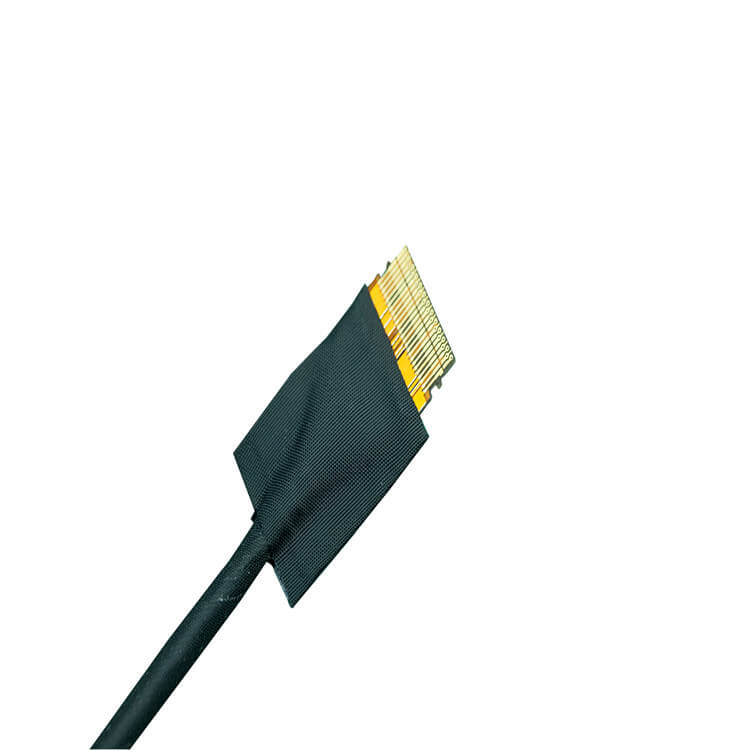
GPS and Satellite Communication: Ensures accurate signal transmission for global positioning and real-time weather updates.
Radar and Terrain Awareness Systems: Maintains high-speed data transfer for collision avoidance and terrain mapping.
Flight Control Systems: Relays commands between flight computers and actuators with minimal latency.
Cockpit Displays: Delivers high-resolution video and data to pilots without degradation.
3. How to Select the Right Micro-Coaxial Cable
Choosing the best micro-coaxial cable for avionics wiring involves evaluating:
Frequency Range: Match the cable’s bandwidth to your system’s requirements (e.g., 6 GHz for radar systems).
Shielding Effectiveness: Opt for double-shielded or triaxial designs for high-EMI zones.
Flexibility and Bend Radius: Ensure the cable can withstand repeated bending in dynamic aircraft environments.
Compliance: Verify certifications like MIL-DTL-17 or AS23053 for aviation-grade reliability.
4. Installation Best Practices
Proper installation maximizes performance and longevity:
Avoid Sharp Bends: Exceeding the bend radius can damage the dielectric layer, causing signal loss.
Secure Connections: Use aviation-grade connectors (e.g., SMA, BNC) and follow crimping guidelines to prevent loosening during flight.
Route Away from Interference Sources: Keep micro-coaxial cables separate from high-power wiring or rotating machinery.
Test Post-Installation: Conduct time-domain reflectometry (TDR) to identify any impedance mismatches or faults.
5. Future Trends in Avionics Wiring
As aircraft adopt more electric architectures (MEA) and integrate AI-driven navigation, micro-coaxial cables will play a pivotal role in:
Supporting higher data rates for AI/ML-powered systems.
Enabling fiber-optic hybrid designs for ultra-high-speed applications.
Reducing weight further through advanced materials like liquid crystal polymer (LCP) insulation.
In the world of modern connectivity, coaxial cables play a crucial role in transmitting audio, video, and data signals. Whether it’s for your home entertainment system, internet connection, or security cameras, a damaged coaxial c...
When it comes to sourcing coaxial cable assemblies for your project—whether it’s for telecommunications, aerospace, industrial automation, or consumer electronics—one of the most critical questions you’ll ask is: What is the cost per fo...
In the semiconductor industry, where device miniaturization (e.g., 3nm–5nm process nodes) and testing precision continue to advance, micro-coaxial cables have emerged as critical components in ensuring reliable signal transmission durin...
Coaxial cables have long been the backbone of various communication and transmission systems, playing an indispensable role in ensuring stable signal transmission. In recent years, with the continuous development of technology, the dema...
The price of coaxial cables varies significantly across different models, influenced by design specifications, performance capabilities, and application requirements. Understanding these differences helps users make cost-effective decis...
Documenting micro coaxial cable test results accurately is crucial for quality control, troubleshooting, failure analysis, and ensuring reliable performance in your applications. Proper documentation creates a clear record for anyone re...
Is your medical device innovation relying on micro-coaxial cable for critical signal transmission? Whether it’s delivering life-saving data in a pacemaker, enabling precise imaging in endoscopic cameras, or powering diagnostics, e...
Micro coaxial cables – the tiny heroes powering high-speed signals in our electronics – are constantly evolving. As devices become more compact, powerful, and connected, these essential interconnects face new demands. Let’s explor...
In the intricate ecosystem of data centers, where every component plays a critical role in maintaining seamless operations, coaxial cable assemblies stand as unsung heroes. These specialized cables facilitate the transfer of high-freque...
In high-traffic areas such as data centers, industrial plants, commercial buildings, and transportation hubs, coaxial cable assemblies play a critical role in transmitting high-frequency signals reliably. However, these environments pos...
The short answer is yes—coaxial cable assemblies are not only usable but also a reliable choice for outdoor security systems, provided they meet specific environmental and performance standards. Outdoor security setups (such as IP ...
The world of military technology operates at the bleeding edge, demanding unwavering reliability in the harshest environments. At the heart of countless critical systems – from radar and electronic warfare to satellite communications an...
Outdoor CCTV systems are essential for security, but their performance hinges on protecting vulnerable components like micro-coaxial connections from water damage. Moisture ingress can degrade signal quality, cause corrosion, and lead t...
In the intricate web of wireless communication systems, coaxial cable assemblies serve as the critical lifeline, bridging transmitters, receivers, antennas, and other key components. Their role in ensuring reliable signal transmission—f...
In an era where seamless connectivity defines everything from home entertainment to critical industrial operations, signal interference remains a persistent headache. Whether it’s a pixelated TV screen, dropped security camera feeds, or...
Selecting the right coaxial cable assemblies is critical for optimizing the performance, reliability, and longevity of radio systems. Whether for amateur radio, commercial communication, or industrial wireless applications, suboptimal c...
Coaxial cable assemblies are critical components in industries ranging from telecommunications and aerospace to medical equipment and industrial automation. Their ability to transmit high-frequency signals with minimal interference depe...
Looking for reliable information on micro coax cable installation? You’ve come to the right place. Micro coaxial cables (often abbreviated as “micro coax”) are the lifeblood of modern high-frequency electronics. F...
In the realm of signal distribution systems, cable splitters and taps play pivotal roles in ensuring efficient and reliable transmission of audio, video, and data signals. While both devices serve the purpose of dividing signals, they f...
The short answer is yes—coaxial cable assemblies are highly customizable, and this flexibility is critical for meeting the unique requirements of diverse industries, from telecommunications and aerospace to medical devices and industria...
The relentless hum, the powerful thuds, the constant tremors – heavy machinery operates in a world dominated by vibration. While essential for demanding industrial tasks, this vibration poses a silent, pervasive threat to the intricate...
Ever looked at a blurry X-ray or a fuzzy ultrasound and worried about accurate diagnosis? In the high-stakes world of medical imaging, clarity is crucial. One unsung hero powering this precision is the micro-coaxial cable. These tiny ...
In today’s interconnected world, where cables power everything from data centers to industrial facilities, organized cable identification is more than just a matter of neatness—it’s a cornerstone of efficient operations, safety, and cos...
In military operations, reliable communication can make the difference between mission success and failure. Military-grade communication systems demand components that can withstand extreme conditions while delivering consistent perform...
In the era of Industry 4.0, smart manufacturing has become the core driver of industrial upgrading, relying on advanced technologies such as the Internet of Things (IoT), artificial intelligence (AI), and automation to realize efficient...
The global shift toward smart infrastructure—encompassing smart grids, intelligent transportation systems, smart buildings, and industrial IoT (IIoT)—has intensified the demand for high-performance connectivity solutions. Among these, m...
In an era dominated by digital connectivity, coaxial lines serve as the backbone of numerous critical systems, from cable television and high-speed internet to security cameras and satellite communications. These lines are designed to t...
In the complex and ever – changing landscape of modern industry, coaxial cables serve as the vital lifelines of communication and signal transmission. Whether in the harsh offshore oil platforms, the humid and hot chemical plants,...
The demand for micro-coaxial cables is surging, driven by high-speed data transfer in devices like smartphones, medical equipment, automotive sensors, and aerospace systems. Alongside performance, manufacturers and end-users are increas...
In the relentless drive for smaller, faster, and more powerful electronics, a silent hero quietly enables success: the micro coaxial cable. These miniature marvels are far more than just tiny wires; they are the critical arteries ...
Technical Foundations of Coaxial Cables in SurveillanceA. Cable Types and SpecificationsSurveillance systems primarily use RG-59, RG-6, and RG-11 coaxial cables, differentiated by their impedance, shielding, and bandwidth:
...
The global transition toward smart grids is revolutionizing how we generate, distribute, and consume utilities. At the heart of this transformation are Advanced Metering Infrastructure (AMI) systems, commonly known as smart metering sys...
Structural Advantages for Medical UseThe core architecture of micro-coaxial cables—comprising a central conductor, dielectric insulation, shielding layer, and protective jacket—is optimized for medical environments:
Miniaturizati...
Introduction
In today’s high-frequency electronic applications, flexible coaxial cables with superior shielding performance have become critical components for signal integrity. These specialized cables combine exceptional EMI/...
Compact Structure and Precision EngineeringMicro coaxial cables are distinguished by their miniature size, typically with outer diameters ranging from 0.25 mm to 2 mm. Despite their small footprint, they maintain a layered structure s...
Passive Intermodulation (PIM) has long been a critical challenge in high-frequency communication systems, where even minute unwanted signals can disrupt signal integrity and degrade network performance. Micro-coaxial cables, widely used...
The future of reliable connectivity in demanding environments just took a quantum leap forward. A groundbreaking patent for self-healing micro-coaxial cables has been officially filed, promising to dramatically reduce failures, ext...
The insatiable demand for bandwidth – driven by 4K/8K streaming, cloud gaming, smart homes, and the proliferation of connected devices – pushes network operators to constantly innovate. While pure Fiber-to-the-Home (FTTH) often grabs he...
When working with delicate electronics or high-frequency signal applications, precision is non-negotiable. For 0.81mm micro-coaxial cables—commonly used in medical devices, aerospace systems, and telecommunications—a reliable crimping t...
KEL’s Micro Coaxial Cable solutions are at the forefront of modern electronic connectivity, offering exceptional performance in high-speed data transmission, miniaturization, and reliability. These connectors are integral to various.
Meta Description: Discover our premium Flexible Micro-Coaxial Assemblies—engineered for high-frequency signal integrity, durability, and versatility in aerospace, medical, telecom, and robotics applications.
What Are Flexible .
Contact Us
Feel free to reach out to us for any inquiries or orders.