Micro Coaxial Cable for Drone Camera: The Invisible Backbone of High-Quality Aerial Video - Micro Coaxial Cable factory-(FRS)
Micro Coaxial Cable factory-(FRS)
INFO
When you see crisp 4K or even 8K footage from a racing drone, the credit often goes to the camera sensor and the video transmitter. However, a tiny but critical component—the micro coaxial cable—is quietly working inside the drone to ensure every pixel arrives intact. This article explains what a micro coaxial cable is, why it’s essential for drone cameras, and how to choose the right one for your project.
What Is a Micro Coaxial Cable?
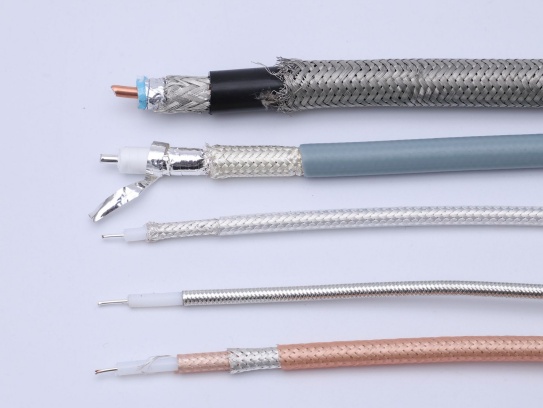
A micro coaxial cable(or micro coax) is a very thin, high-frequency cable. Each signal line has its own center conductor, insulation, shielding layer, and outer jacket. This structure provides a controlled impedance (typically 50 Ω or 75 Ω), low loss, and excellent electromagnetic interference (EMI) resistance.
Key features include:
Ultra-thin:Diameters range from 0.25 mm to 1 mm, ideal for tight spaces.
High performance:Supports Gbps-leveldata rates for MIPI, LVDS, and other high-speed video signals.
Flexible:Can be bent and routed precisely within compact devices like smartphones and drones.
Why Drone Cameras Rely on Micro Coax
In a drone, the camera module connects to the image processing board or video transmitter via a micro coax cable assembly. This is crucial for several reasons:
High-Resolution, High-Frame-Rate Video Modern drone cameras often use MIPI CSI-2 interfaces with data rates of several Gbps. Standard wires or FPC cables suffer from signal loss, crosstalk, and EMI at these speeds. Micro coax, with its individual shielding, maintains signal integrity over short distances, ensuring stable 4K/60fps or even 8K video transmission.
Harsh Operating Environments Drones experience constant vibration, rapid acceleration, and wide temperature swings. The robust construction of a micro coax—featuring a fine stranded center conductor and multi-layer shielding—provides the durability needed for reliable performance in these conditions.
Space and Weight Constraints Every gram matters for flight time and maneuverability. Micro coax is significantly lighter and thinner than traditional coax, allowing for more compact and aerodynamic drone designs.
EMI/EMC Challenges The drone’s motors, ESCs, and wireless links create a noisy electromagnetic environment. The superior shielding of micro coax minimizes interference, preventing image artifacts like flickering or stripes.
Micro Coax vs. Other Cables
Understanding the differences helps in selecting the right cable for your drone camera.
Feature
Micro Coaxial Cable
FPC / Ribbon Cable
Standard Coaxial Cable
Shielding
Individual, per signal
None or minimal
Single shield for all signals
EMI Resistance
Excellent
Poor
Good
Signal Integrity
High (low loss, low crosstalk)
Degrades at high speeds
Good over longer distances
Flexibility
Good for tight bends
Flexible, but limited in tight spaces
Stiff, not ideal for complex routing
Size/Weight
Very small and light
Thin and light
Larger and heavier
Key Clarification:LVDS (Low-Voltage Differential Signaling) is a signaling standard, not a cable type. Micro coax is an excellent physical mediumfor carrying LVDS and MIPI signals due to its impedance control and shielding.
Key Parameters for Drone Camera Micro Coax
When selecting a micro coaxial cable, consider these critical factors:
Impedance:Match the system requirement, typically 50 Ωfor digital video. Consistency from cable to connector is vital to prevent signal reflections.
Attenuation (Loss):This increases with frequency and cable length. For a 15–20 cm run in a drone, high-quality micro coax can maintain excellent signal quality for multi-Gbps signals.
Shielding Effectiveness:Look for cables with robust shielding (e.g., braid + foil) to combat EMI from motors and other electronics. Grounding is equally important.
Mechanical Properties:The cable must withstand repeated bending. Specify the minimum bend radius and flex life. Consider the cable’s temperature rating for high-heat environments.
Connector Compatibility:The most common connectors are micro coax types like I-PEX (MHF), Hirose DF36/DF81, and JAE FI-R/FI-X. A poor connection can ruin the signal, so choose a reputable manufacturer with proven crimping and testing processes.
Design Tips for Using Micro Coax in Drones
Keep It Short:Minimize cable length to reduce signal loss and reflections. Place the image processing board as close to the camera as possible.
Mind the Bends:Avoid sharp, repeated bends. Follow the manufacturer’s recommended minimum bend radius to prevent damage to the shielding and conductors.
Ensure a Solid Ground:A continuous ground plane and proper connector grounding are essential for EMI performance. Avoid daisy-chaining ground connections.
Choose the Right Connector:Select a connector that matches your PCB layout, current needs, and desired cable exit angle. Reliability is more important than saving a few cents.
Test Thoroughly:Perform high-speed signal integrity tests and real-world flight tests. Vibration tests are crucial for racing or industrial drones to ensure long-term reliability.
🎯Matching Cable to Your Drone Application
Consumer / Racing Drones:Prioritize lightweight, high flexibility, and cost-effectiveness. Focus on 1-3 meter digital video links (e.g., MIPI, LVDS) with robust shielding.
Professional / Industrial Drones:Emphasize reliability and environmental resistance. Look for cables rated for wider temperature ranges, higher flex cycles, and resistance to moisture or chemicals.
Miniature / Toy Drones:Every millimeter counts. Use the thinnest, lightest micro coax possible while ensuring it meets the signal integrity requirements of your camera.
Conclusion
The micro coaxial cableis a critical, yet often overlooked, component in a drone camera system. By understanding its role and key selection parameters, you can significantly improve your drone’s image quality, stability, and overall performance.
If you’re designing a new drone or upgrading an existing one, consider investing in high-quality micro coax cable assembliesfrom a reputable supplier. The right cable can be the difference between a frustrating, glitchy video feed and crystal-clear aerial footage.
In today’s interconnected world, electronic devices and systems rely on stable signal transmission to function effectively. However, electromagnetic interference (EMI)—unwanted electrical or magnetic energy that disrupts signal integrit...
In the fast-paced world of telecommunications, where network stability, bandwidth capacity, and signal integrity directly impact user experience and business operations, leading telecom companies are increasingly selective about their i...
Laboratory equipment, such as spectrum analyzers, signal generators, and network analyzers, relies heavily on precise signal transmission to ensure accurate test results. Coaxial cable assemblies serve as the critical link in this proce...
Coaxial cable assemblies are critical components in signal transmission systems, used across industries like telecommunications, aerospace, medical equipment, and industrial automation. Their bandwidth capacity—defined as the maximum fr...
Unmanned Aerial Vehicles (UAVs), or drones, have revolutionized modern warfare. From intelligence, surveillance, and reconnaissance (ISR) to precision strikes and logistics, their impact on the battlefield is undeniable. However, the ha...
Documenting micro coaxial cable test results accurately is crucial for quality control, troubleshooting, failure analysis, and ensuring reliable performance in your applications. Proper documentation creates a clear record for anyone re...
When it comes to setting up or maintaining coaxial cable systems, proper preparation is the foundation of reliable performance. Whether you’re working on a home theater setup, a security camera system, or industrial communication networ...
Introduction
Modern high‑resolution displays push video interfaces to their limits. To deliver 4K@120Hz, 8K@60Hz, 10‑bit/12‑bitcolor, and HDRwith minimal artifacts, display modules require interconnects that combine very high bandwid...
Introduction: The Critical Role of TDR in Micro-Coax IntegrityTime Domain Reflectometry (TDR) testing is the cornerstone of ensuring signal integrity and reliability in modern micro-coaxial cable networks. As devices shrink and data rat...
The short answer is yes—modern coaxial cable assemblies are specifically engineered to support high-frequency signal transmission, and they play an irreplaceable role in industries relying on precise, low-distortion high-frequency signa...
Coaxial cable assemblies are critical components in various industries such as telecommunications, aerospace, medical equipment, and automotive electronics. Their performance and reliability are closely tied to proper packaging, which n...
Coaxial cables have played a pivotal role in the evolution of network communication systems. Among them, Thicknet (Thick coaxial cable) and Thinnet (Thin coaxial cable) were widely used in early Ethernet implementations, particularl...
In high-speed digital and analog systems, maintaining signal integrity is paramount to ensure reliable data transmission. Among the key components that contribute to this integrity, termination resistors play a critical role in preventi...
Coaxial cable assemblies are the unsung heroes of modern connectivity, enabling the reliable transmission of radio frequency (RF) signals in everything from telecommunications networks and aerospace systems to medical devices and indust...
In the complex web of electrical and data systems that power modern commercial buildings, cable management is a critical yet often overlooked component. Cable trays and ladders serve as the backbone of organized, safe, and efficient cab...
Choosing between micro coaxial cables and regular coaxial cables depends on your project’s needs. Here’s a concise comparison to guide your decision: Key Differences Feature Regular Coaxial Cable Micro Coaxial Cable Size T...
Micro coaxial cable assemblies are the unsung heroes inside countless devices – from medical equipment and aerospace systems to high-speed data centers and consumer electronics. Their tiny size belies their critical role in transmitting...
In the modern world, where seamless communication and reliable signal transmission are the backbones of countless industries, coaxial cables stand as unsung heroes. From television broadcasting to telecommunications, from medical equipm...
Introduction
Industrial cable assemblies are critical components in aerospace, automotive, oil/gas, and military applications, where they must withstand extreme temperatures (-60°C to +200°C). Rigorous testing ensures reliability, sa...
The short answer is: Absolutely yes. Coaxial Cable Assemblies have become an indispensable component in modern medical equipment, thanks to their unique structural design and performance advantages that perfectly align with the strict o...
In the ever – evolving field of coaxial cable manufacturing, the adoption of new materials has become a key driver of progress. Our company is proud to be at the forefront of this innovation by integrating a cutting – edge n...
n an era defined by lightning-fast connectivity and shrinking electronic devices, micro coaxial cables have emerged as unsung heroes powering the seamless flow of data. These miniature yet mighty cables are engineered to meet the escala...
In the rapidly evolving landscape of advanced electronics, the demand for high-performance connectivity solutions has never been greater. Among the key components driving this demand, Micro-Coaxial Cables stand out as critical enablers,...
In today’s interconnected world, coaxial cables serve as the backbone of critical communication, data transmission, and industrial control systems—powering everything from 5G base stations and data centers to subway communication networ...
In the dynamic world of stadiums and arenas, where thousands gather to cheer for their favorite teams or enjoy live performances, a seamless audio-visual (AV) experience is non-negotiable. From giant video screens displaying instant rep...
In film production, reliable signal transmission is key to capturing high-quality audio and video. Coaxial cables play a vital role here, but choosing the right one and using it properly can be tricky. This guide breaks down everything ...
Aerospace telemetry systems serve as the “nervous system” of aircraft, spacecraft, and unmanned aerial vehicles (UAVs), transmitting critical data such as flight parameters, engine performance, and payload status in real tim...
In the realm of modern connectivity, long-distance cable runs are a fundamental aspect of various industries, from telecommunications and networking to audio-visual setups. However, as signals travel over extended cable lengths, they en...
We are excited to announce that our factory has officially launched a professional coaxial cable installation service. This service is designed to meet the growing demand for high-quality, reliable coaxial cable installations across var...
1. High-Frequency Signal Fidelity Supports Ultra-High Frequency Transmission: Micro coaxial cables can reliably transmit high-frequency signals up to 40 GHz, meeting the bandwidth requirements of high-definition audio (e.g., 24-bi...
Introduction: The Unseen Backbone of Ultra-High Definition
As we transition from the crisp clarity of 4K to the immersive hyper-realism of 8K, the engineering challenges behind the screen become exponentially complex. We often focus ...
In the world of high-speed connectivity, the demand for smaller, faster, and more reliable components is relentless. As devices shrink and frequencies climb, the standard coaxial cable often becomes a bottleneck. This is where the Custo...
Tired of replacing delicate micro-coaxial cables far sooner than expected? A breakthrough in materials science is delivering unprecedented resilience, potentially quadrupling the usable life of these critical components. Discover ...
Forget bulky cables and signal dropouts. If you’re navigating the rapidly evolving landscape of factory automation – deploying robotics, vision systems, or complex sensor networks – you’ve likely encountered the critica...
In the harsh and complex marine and offshore environments, reliable communication is crucial for safety, operations, and coordination. Coaxial cables play a vital role in ensuring seamless signal transmission in these settings. This art...
In the fast-evolving world of medical technology, devices like implantable sensors, MRI machines, and surgical robots rely on precision-engineered components to function safely and accurately. Among these components, medical-grade micr...
Virtual Reality (VR) promises unparalleled immersion, transporting users to meticulously crafted digital worlds. Yet, the magic can quickly shatter if the visuals stutter, lag, or lack clarity. Delivering the massive amounts of high-fid...
In the field of electronic measurement, where precision and signal integrity are paramount, micro-coaxial cables have emerged as a critical component. Unlike standard coaxial cables, these miniature versions are engineered to deliver ex...
In the world of broadcasting, nothing frustrates listeners or viewers more than a distorted signal. Interference can ruin the entire experience, whether it’s static on a radio, pixelation on a TV, or dropped audio in a live stream. Achi...
A leading national television network has recently selected our high-performance coaxial cables for its large-scale broadcast infrastructure upgrade, marking a significant milestone in our commitment to delivering reliable connectivity ...
Meta Description: Discover premium RF micro coaxial cables engineered for high-frequency signal transmission in compact devices. Explore specs, applications, and benefits for telecom, medical, and aerospace industries.
.
IntroductionThe High-Temperature Resistant Micro-Coaxial Cable is a cutting-edge connectivity solution engineered to deliver exceptional performance in extreme thermal environments. Combining precision engineering with advanced mate.
Contact Us Micro Coaxial Cable factory-(FRS).
Feel free to reach out to us for any inquiries or orders