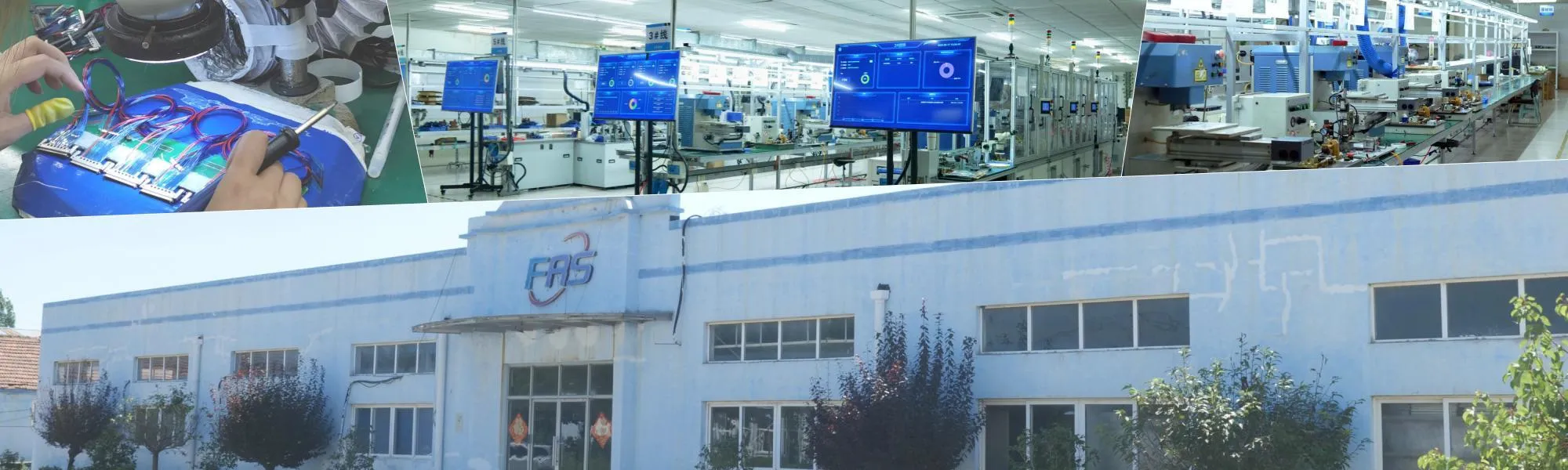
Micro Coaxial Cable factory-(FRS)
The coaxial cable, with its concentric conductor-dielectric-shield-jacket structure, has been a cornerstone for RF, video, and broadband transmission for decades. As we enter 2026, the industry is undergoing a significant shift. While traditional coax remains vital for infrastructure, a new class of interconnect—micro coaxial cable—is redefining what’s possible inside high-density, high-frequency devices.
This article provides a detailed, engineering-focused comparison to help you select the right cable for your 2026 project.
A micro coaxial cable is a miniaturized version of a standard coax, retaining the same four-layer structure but engineered for extreme space constraints and high-frequency integrity.
| Dimension | Micro Coaxial Cable | Traditional Coaxial Cable |
|---|---|---|
| Physical Size & Density | OD:0.2–1.16 mm. Enables ultra-high-density harnesses in compact devices like smartphones and drones. | OD:Several mm to over 1 cm (e.g., RG-6 is ~6.9 mm). Prioritizes robustness over density. |
| Electrical Performance | Maintains stable 50 Ω / 75 Ωimpedance and low loss at GHz frequenciesover short distances. | Optimized for low-loss, long-distancetransmission (100s of meters) at MHz to low GHzfrequencies. |
| Signal Integrity | Excellent EMI shielding and impedance consistency are critical for multi-gigabit differential signals (e.g., MIPI, HDMI). | Susceptible to crosstalk and interference over long runs without careful installation. Shielding is robust but less critical for its primary long-haul role. |
| Mechanical & Environmental | Designed for high flexibility and tight bend radii. Built to withstand millions of flex cycles in hinges and connectors. | Built for tensile strength and crush resistance. Less flexible, with bend radius limited to several times the cable diameter. |
| Manufacturing & Cost | High-precision, high-costprocess. Yields are sensitive to tiny dimensional variations. | Mature, high-volume, lower-costmanufacturing. Easier to automate and scale. |
| Applications | Internal device interconnects: smartphones, wearables, medical scopes, automotive radar, and high-res displays. | Infrastructure: cable TV (CATV), broadband, CCTV, 5G base stations, and long-haul RF links. |
Modern systems often use a hybrid approach:
This leverages the strengths of each technology, creating a cost-effective and high-performance system.
By 2026, micro coaxial cable is no longer a niche product. Driven by 5G, autonomous vehicles, and AR/VR, the industry is pushing towards even smaller diameters (e.g., 52 AWG), advanced shielding, and lower-loss dielectrics. As devices become more powerful and compact, the ability to move clean, high-speed signals through minimal space will only increase the importance of micro coax.
Choosing between micro and traditional coax is not about one being “better”; it’s about selecting the right tool for the job. Understanding their distinct strengths ensures your 2026 designs are not just functional, but optimized for performance, reliability, and cost.
Our factory offers high-quality products at competitive prices
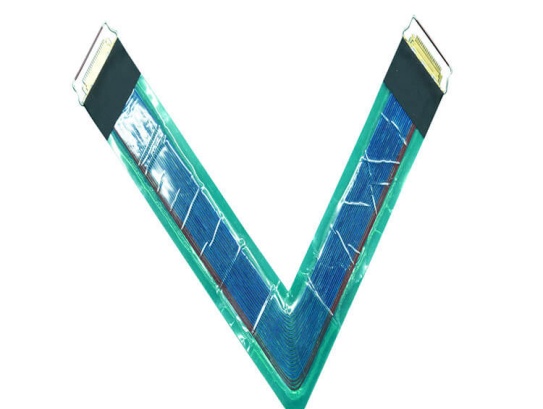
IntroductionThe High-Temperature Resistant Micro-Coaxial Cable is a cutting-edge connectivity solution engineered to deliver exceptional performance in extreme thermal environments. Combining precision engineering with advanced mate.
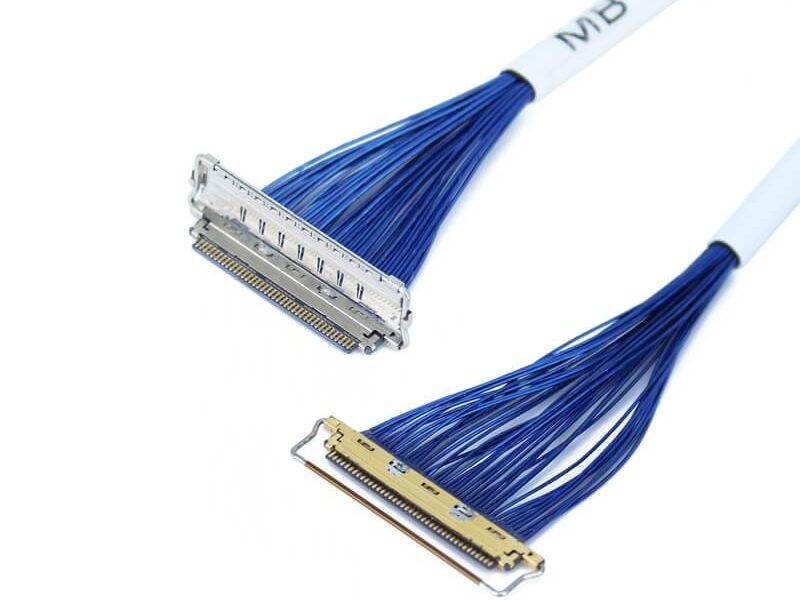
In LVDS (Low Voltage Differential Signaling) display systems, Micro-coaxial Cable (also referred to as Micro Coax Cable) stands out as an optimal solution for high-resolution, high-reliability signal transmission. Designed to meet the str.
Feel free to reach out to us for any inquiries or orders