
Micro Coaxial Cable-Micro Coaxial Cable factory-(FRS)-FRS
5G carrier aggregation (CA) has emerged as a cornerstone technology to unlock the full potential of next-generation wireless networks, enabling higher bandwidth, lower latency, and seamless connectivity across diverse use cases—from urban IoT deployments to enterprise private networks. At the heart of this technology lies the need for reliable, high-performance transmission media that can handle the complex demands of aggregated frequency bands. Micro-coaxial cables, with their unique combination of compact size, signal integrity, and mechanical flexibility, have become an indispensable component in 5G CA systems, addressing critical challenges that traditional cables often fail to resolve.
5G CA works by combining multiple contiguous or non-contiguous frequency bands (from sub-6 GHz to mmWave) into a single logical channel, effectively boosting data rates and network capacity. However, this aggregation introduces three key challenges for transmission cables: bandwidth versatility, signal fidelity under aggregation, and space efficiency. Traditional coaxial cables, while robust for single-band applications, often suffer from signal loss at higher frequencies (especially mmWave) and bulkiness that limits deployment in dense 5G infrastructure. In contrast, micro-coaxial cables are engineered to meet these imperatives head-on.
Bandwidth versatility is critical because 5G CA spans a wide frequency spectrum—from sub-6 GHz (3.5 GHz, 2.6 GHz) to mmWave (28 GHz, 39 GHz). Micro-coaxial cables use precision-engineered conductors (typically copper-clad aluminum or pure copper) and low-dielectric-constant insulators (such as PTFE or FEP), enabling them to maintain stable performance across this broad range. Unlike twisted-pair cables, which are prone to crosstalk in multi-band setups, micro-coax’s shielding design minimizes interference between aggregated bands, ensuring each channel operates without degradation.
Micro-coaxial cables offer four distinct advantages that make them ideal for 5G CA:
Micro-coaxial cables are deployed across multiple layers of 5G CA networks, with specific use cases tailored to their strengths:
When selecting micro-coaxial cables for 5G CA, three factors are critical: cable impedance (must match RF components to avoid signal reflection), temperature rating (outdoor deployments require cables that withstand -40°C to 85°C), and connector compatibility (popular options include SMA, SMB, and MMCX for different form factors). Additionally, cable bending radius should be considered—most micro-coax cables have a minimum bend radius of 5x their outer diameter, ensuring durability during installation.
As 5G evolves toward 5G-Advanced (5.5G) with higher CA ratios (up to 32 aggregated bands) and extended mmWave frequencies (60 GHz, 70 GHz), micro-coaxial cables will continue to evolve. Manufacturers are developing next-gen micro-coax with even lower dielectric loss (using advanced materials like liquid crystal polymers) and smaller diameters (down to 0.5 mm) to support ultra-dense CA deployments. Additionally, hybrid micro-coax systems—combining fiber optics for long-haul CA backhaul and micro-coax for last-mile RF distribution—are emerging as a cost-effective solution for large-scale 5G networks.
In conclusion, micro-coaxial cables are not just a supporting component but a enabler of 5G carrier aggregation, addressing the technology’s unique challenges of bandwidth, space, and signal integrity. Their versatility across sub-6 GHz and mmWave bands, combined with mechanical flexibility and EMI robustness, makes them a critical choice for network operators and device manufacturers looking to maximize the performance of 5G CA. As 5G networks expand and advance, micro-coax will remain at the forefront of transmission technology, adapting to meet the growing demands of next-generation connectivity.
Our factory offers high-quality products at competitive prices
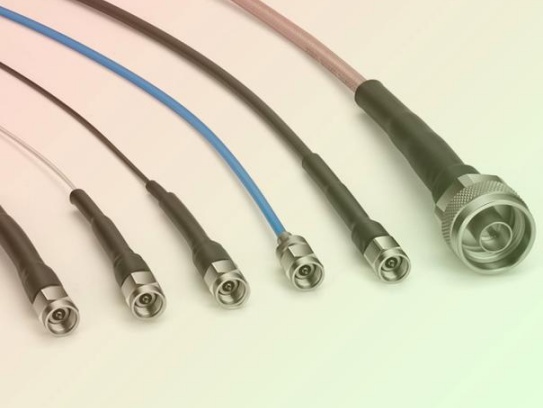
H1: Precision Instrument Micro-Coax – Engineered for Critical Signal Integrity Meta Description: Discover Precision Instrument Micro-Coax: Miniature coaxial cable solution optimized for high-frequency signal transmissio.
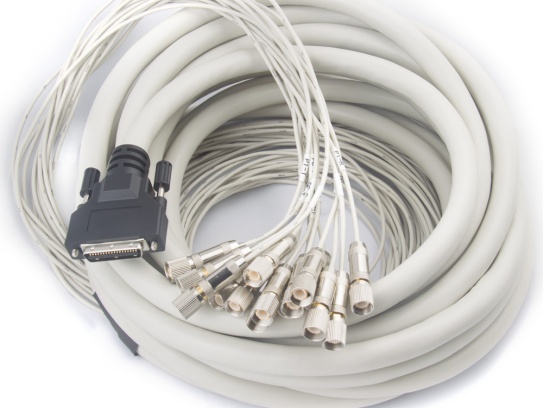
Meta Description: Discover our premium Flexible Micro-Coaxial Assemblies—engineered for high-frequency signal integrity, durability, and versatility in aerospace, medical, telecom, and robotics applications. What Are Flexible .
Feel free to reach out to us for any inquiries or orders