Micro-Coaxial vs Fiber Optics: Bandwidth Limits in the Crucible of Harsh Environments - Micro Coaxial Cable factory-(FRS)
Micro Coaxial Cable factory-(FRS)
INFO
Choosing the right cabling technology isn’t just about raw speed. In demanding environments like factory floors, aerospace systems, military deployments, oil & gas installations, and heavy transportation, cables face extreme conditions. Here, bandwidth limits become deeply intertwined with environmental resilience. This clash is particularly sharp when comparing Micro-Coaxial (Micro-Coax) and Fiber Optic cables. Let’s break down how each performs under pressure.
The Contenders Defined
Micro-Coaxial (Micro-Coax):
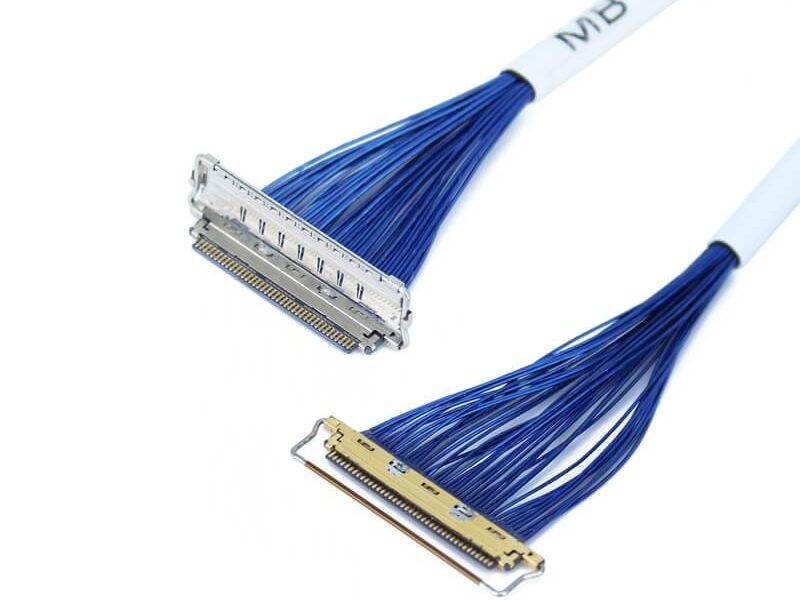
What it is: A miniaturized version of traditional coaxial cable. It features a central copper conductor, insulating dielectric, a copper braided shield, and an outer protective jacket. Typical diameters range from 1mm to 2.2mm.
Core Advantage: Familiarity, robust physical termination (often using crimp-style connectors), and cost-effectiveness for certain scales.
Core Limitation: Electrical signals are inherently susceptible to ElectroMagnetic Interference (EMI) and signal degradation over distance.
Fiber Optic Cable:
What it is: Cable containing extremely thin strands of glass (or sometimes plastic) called optical fibers. Data travels as pulses of light.
Core Advantage:Immune to EMI and Radio Frequency Interference (RFI), extremely high theoretical bandwidth potential, light weight, longer maximum distances without repeaters.
Core Limitation: Higher initial connectorization cost, greater physical fragility of the glass core, termination requires more specialized equipment/skills.
Bandwidth: The Race & The Reality Check
Raw Speed Potential: Fiber optics wins hands-down in the lab. Single-mode fibers offer virtually limitless bandwidth potential measured in terabits per second (Tbps) over kilometers. Multi-mode fiber commonly supports 10G, 40G, 100G, and beyond over shorter distances. Micro-coax cables designed for high-speed digital signals (e.g., standards like FAKRA, HSD, or newer automotive ethernet variants) can achieve impressive speeds – think 1Gbps, 2.5Gbps, 5Gbps, even 10Gbps and higher over short links (typically meters, not kilometers).
Bandwidth in Harsh Environments – The Critical Factor: Raw lab specs mean little if the environment chokes the signal. This is where environmental factors drastically alter the effective bandwidth limits of each technology:
EMI/RFI: Factories and vehicles are EMI jungles (motors, inverters, power lines). Micro-coax shields can protect, but strong interference will degrade signal quality (increased Bit Error Rate – BER). As interference increases, the achievable bandwidth reliably decreases, or requires lower BER thresholds. Fiber optics are immune. EMI has zero effect on the light signal, allowing fiber to deliver its full rated bandwidth consistently, regardless of nearby electrical noise. Micro-coax bandwidth is vulnerable to EMI degradation; fiber bandwidth is robust against it.
Signal Attenuation (Loss): All signals weaken over distance. High-frequency signals in micro-coax attenuate much faster than light in fiber. Heat accelerates attenuation in copper. In hot environments (e.g., engine compartments, industrial ovens), micro-coax might need shorter runs or signal boosters to maintain high bandwidth targets, increasing complexity and cost. Fiber attenuation is much lower and less temperature-sensitive at typical industrial temperatures (though extremes can impact it). Fiber maintains its bandwidth potential over much longer distances, especially in high-temp environments.
Temperature Extremes:
Cold: Micro-coax can become brittle, increasing the risk of cracking during flexing/vibration. While signal propagation might improve slightly, physical failure negates bandwidth. Fiber jackets can also harden, but the glass core itself is very temperature-stable. Specialized fiber cables exist for extreme cold.
Heat: As mentioned, heat increases copper loss, directly limiting usable micro-coax bandwidth and distance. Prolonged high heat can also degrade connector materials. Fiber can handle higher core temperatures reliably before signal degradation becomes significant (consult specific cable specs).
Vibration & Flexing: Constant shaking (trucks, aircraft, machinery) stresses cables and connections. Micro-coax connectors, while robust mechanically, can develop intermittent connections or shield damage over time, leading to signal drops or noise introduction, throttling reliable bandwidth. Fiber is very resistant to electrical degradation from vibration. However, tight bends or crushing forces can physically break the glass fiber or induce losses (“macrobending” or “microbending”). Bend-insensitive fiber types help, but careful routing is still essential to preserve bandwidth. Micro-coax vibration issues cause electrical faults; fiber vibration issues cause physical breaks or light loss.
Chemicals & Moisture: Exposure to oils, fuels, solvents, and water can degrade micro-coax jackets and connectors, leading to corrosion, shorts, and signal loss/jitter, degrading bandwidth performance. Fiber optic cables use specialized jacketing materials (e.g., Polyethylene, Flame-Retardant variants) highly resistant to harsh chemicals and moisture. Properly sealed connectors maintain performance. Chemical/moisture exposure directly threatens micro-coax electrical integrity and thus bandwidth; properly jacketed fiber is far more resistant.
Size & Weight: Micro-coax wins on ease of termination with compact crimp connectors. However, fiber offers dramatically higher bandwidth density – you can fit vastly more data capacity in the same space or weight. Crucial for weight-sensitive applications (aerospace) or high-density panels. Per mm² or gram, fiber optics deliver vastly higher bandwidth potential.
Decision Framework: Bandwidth + Environment
Use this to guide your initial thinking:
Factor
Micro-Coaxial
Fiber Optics
EMI/RFI Heavy?
❌ (Bandwidth Suffers)
✅ (Bandwidth Unaffected)
Need Ultra-High BW?
❌ (Limited, esp. long dist.)
✅ (Virtually Unlimited Potential)
Extreme Heat?
❌ (Increased Loss → Lower BW)
✅ (High Temp. Versions Available)
Harsh Chemicals?
❌ (Corrosion → Signal Degradation)
✅ (Chemically Resistant Jackets)
Constant Vibration?
⚠️ (Risk of Intermittent Signals)
⚠️ (Risk of Breaks if Poorly Handled)
Cost-Sensitive (Short Runs)?
✅ (Lower Connector Cost)
❌ (Higher Connector Cost)
Space/Weight Critical?
⚠️ (Good)
✅✅ (Excellent Bandwidth Density)
Ease of Termination?
✅ (Crimp Tools Common)
❌ (Requires Cleaving/Fusion/Special Tools)
Conclusion: Bandwidth Resilience Wins in Harshness
Micro-coaxial remains a vital solution where robust physical termination, moderate bandwidth needs (typically <= 10Gbps over short distances), and moderate budgets intersect, provided EMI is manageable, distances are short, and environmental extremes are not overwhelming. It excels in cost-sensitive, localized, shielded environments.
Fiber optics, however, are the undisputed champions for maintaining ultra-high bandwidth reliably in harsh environments. Their EMI immunity, lower attenuation over distance, superior chemical resistance, and excellent bandwidth density make them essential where data demands are high and environmental challenges are significant.
When reliability under harsh conditions is paramount, and bandwidth needs are high or growing, fiber optics don’t just offer higher potential bandwidth – they offer dependable bandwidth. While the initial connector cost is higher, the total cost of ownership considering performance, longevity, and reduced troubleshooting often favors fiber in truly demanding settings. Choose based on the specific crucible your cables must endure.
Meta Description: Struggling to choose between micro and standard coax? Compare size, bandwidth, and costs for wearables, IoT, and drones.Article Content:IntroductionAs devices shrink, engineers debate: micro coaxial (0.81mm) or st...
Coaxial cable assemblies are critical components in industries ranging from telecommunications and aerospace to medical equipment and industrial automation. Their ability to transmit high-frequency signals with minimal interference depe...
Micro coaxial cables are essential for high-frequency signal transmission in compact applications like medical devices, aerospace systems, wearables, and 5G infrastructure. The jacket (outer insulation) is critical for performance...
In the world of electronics and telecommunications, coaxial cables play a pivotal role in transmitting signals. One of the most crucial aspects of coaxial cables is their impedance. Understanding coaxial cable impedance is essential for...
When shopping for coaxial cables, one of the most common questions is: “How much does one meter of coaxial cable cost?” While prices vary based on factors like quality, type, and brand, this guide breaks down everything you ...
In the era of miniaturized electronics and high-speed data transmission, micro coaxial cables have emerged as a critical component for applications requiring reliable signal integrity in compact spaces. These cables are a specialized ...
Micro coaxial cable soldering service is a specialized capability that joins ultra‑fine coaxial conductors to connectors or PCB pads with precise impedance control, mechanical reliability, and high‑frequency signal integrity. It is wide...
Understand Your Application RequirementsFrequency Range: Determine the operating frequency of your application (e.g., 1 GHz to 40 GHz). Higher frequencies require cables with low signal loss and stable impedance.Signal Integrity: ...
In the relentless pursuit of faster data transfer, higher bandwidth, and more efficient power delivery within complex systems, a revolutionary solution is gaining significant traction: hybrid cables. These innovative cables ingeniously...
Meta Description: Discover how micro coaxial cables enable reliable high-frequency signal transmission in compact devices. Learn about their applications, advantages, and key selection criteria.
What is a Micro Coaxial Cable?A mi...
When working with electronic devices, antennas, or high-frequency signal systems, choosing the right micro coaxial cable connector is critical. These tiny connectors ensure reliable signal transmission while minimizing interference. But...
Introduction: The Unsung Heroes of Clear Diagnosis
When we marvel at the detailed images produced by MRI machines, CT scanners, or ultrasound devices, we often focus on the sophisticated software and powerful magnets or transducers. ...
In the fast-paced world of telecommunications, where network stability, bandwidth capacity, and signal integrity directly impact user experience and business operations, leading telecom companies are increasingly selective about their i...
In the rapidly evolving technological landscape, electromagnetic interference (EMI) has become a major issue as electronic devices proliferate. Shielded coaxial cables are a proven solution, ensuring reliable signal transmission by prev...
The short answer is a resounding yes. Coaxial Cable Assemblies are integral components in renewable energy systems, playing a critical role in ensuring reliable data transmission, efficient system monitoring, and seamless operation acro...
In an era where environmental sustainability has become a global priority, every industry is re-evaluating its products and processes to minimize ecological impact. The telecommunications and electronics sectors, in particular, are unde...
Renewable energy installations – vast solar farms, towering wind turbines, intricate hydro plants – are complex systems demanding constant vigilance. Accurate monitoring of performance, environmental conditions, and equipment health is ...
Coaxial cables are indispensable in a wide range of installations, including telecommunications, security systems, broadcasting, and home entertainment setups. However, the one-size-fits-all approach of standard cable lengths often fall...
The answer is a resounding yes. Coaxial cable assemblies are indispensable components in broadcast television systems, playing a critical role in ensuring the reliable, high-quality transmission of audio and video signals throughout the...
1. Impedance in Micro Coaxial CablesImpedance, measured in ohms (Ω), defines the cable’s resistance to alternating current (AC) signals. Proper impedance matching minimizes signal reflections and ensures maximum power transfer.
St...
The short answer is: Yes, coaxial cable assemblies are not only compatible with 5G network devices but also play a critical role in 5G signal transmission—provided they meet 5G’s unique technical requirements. Unlike 4G, 5G relies on hi...
In the modern healthcare system, a stable and efficient network is not just a support system but a critical component that directly impacts patient care, medical workflow, and data security. Hospitals handle massive volumes of sensitive...
Addressing the Signal Integrity Challenges in AVsHigh-Frequency DemandsSensor Type:LiDAR: Operates at 905 nm or 1550 nm wavelengths, requiring cables handling 10–100 Gbps.79 GHz Radar: Demands cables stable up to 110 GHz for pr...
In the rapidly evolving landscape of renewable energy, wind turbines have emerged as a crucial source of clean power. As the demand for wind energy continues to grow, ensuring the reliable and efficient operation of wind turbines become...
The relentless drive towards smaller, faster, and more powerful electronic devices isn’t just about packing more computing power into your pocket. It’s also placing immense pressure on the unsung heroes within these devices:...
In the dynamic world of theme parks, where innovation and guest experience reign supreme, reliable communication systems are the backbone of safe and seamless operations. From high-speed roller coasters to immersive dark rides, every at...
In the era of miniaturized electronics and high-frequency communication, the demand for efficient signal transmission in confined spaces has reached unprecedented heights. Whether you are designing the next-generation 5G antenna module,...
As a professional Micro Coaxial Cable Manufacturer, we provide high-performance micro coaxial cable and cable assembly solutions. We offer comprehensive OEM/ODM services, supporting custom diameters, shielding structures, impedance, and...
In the ever – evolving landscape of traffic management systems, the role of reliable communication infrastructure cannot be overstated. Coaxial cable has emerged as a crucial component in enabling the seamless operation of various...
In the world of outdoor electrical and communication setups, the significance of a reliable cable cannot be overstated. When it comes to harsh weather conditions, outdoor-rated coaxial cables emerge as the go-to solution for a plethora ...
In the rapidly evolving fields of robotics and automation, the demand for high – performance components is ever – increasing. One such crucial component is the flexible coaxial cable. This article delves into the significanc...
Coaxial cable connectors and adapters play a crucial role in ensuring seamless integration of various electronic systems. Whether you’re setting up a home entertainment system, a professional audio – visual setup, or a telec...
The rapid evolution of 5G technology has brought about a paradigm shift in wireless communication, with Multiple-Input Multiple-Output (MIMO) technology standing as a cornerstone for achieving the high data rates, low latency, and massi...
Forget bulky cables and signal dropouts. If you’re navigating the rapidly evolving landscape of factory automation – deploying robotics, vision systems, or complex sensor networks – you’ve likely encountered the critica...
In high-resolution camera modules, displays, and embedded vision systems, the MIPI (Mobile Industry Processor Interface) has become the de facto standard for camera (CSI-2) and display (DSI) interconnects. As resolutions, frame rates, a...
If you’re setting up a satellite dish, having the right wiring kit can make all the difference. A satellite dish wiring kit with premium cables isn’t just an add-on—it’s a key part of ensuring reliable signal, clear reception, and long-...
Advanced Driver-Assistance Systems (ADAS) are evolving rapidly, demanding higher resolution, lower latency, and greater reliability from in-vehicle camera systems. At the heart of this evolution lies the Serializer/Deserializer (SerDes)...
We are excited to announce the release of our latest coaxial cable model, a product that embodies our commitment to innovation, quality, and meeting the evolving needs of the market.
In today’s rapidly advancing technological ...
Introduction
Micro-coaxial cables are vital components in industrial automation, telecommunications, and medical equipment. Proper maintenance ensures signal integrity, reduces downtime, and extends cable lifespan. Follow these pract...
In LVDS (Low Voltage Differential Signaling) display systems, Micro-coaxial Cable (also referred to as Micro Coax Cable) stands out as an optimal solution for high-resolution, high-reliability signal transmission. Designed to meet the str.
H1: Precision Instrument Micro-Coax – Engineered for Critical Signal Integrity
Meta Description: Discover Precision Instrument Micro-Coax: Miniature coaxial cable solution optimized for high-frequency signal transmissio.
Contact Us Micro Coaxial Cable factory-(FRS).
Feel free to reach out to us for any inquiries or orders