
Micro Coaxial Cable factory-(FRS)
When designing or sourcing micro coaxial cable assemblies for high-speed data, RF, or video applications, one question comes up again and again:
What impedance values are possible—and how tight can the tolerance be?
This guide answers that question directly. You will learn which impedance values are standard, what ranges are achievable, which factors influence the final number, and how to specify realistic requirements for your next project.
Most micro coaxial cable assemblies are manufactured to a few well-established characteristic impedance points. These values dominate the market because they match common connectors, test equipment, and industry standards.
While other values exist (for example, 85 Ω differential or legacy 93 Ω systems), 50 Ω, 75 Ω, and 100 Ω differential account for the vast majority of commercial micro coaxial assemblies.
So, what impedance values can you actually achieve? The answer depends on cable size, dielectric material, and manufacturing capability.
Impedance tolerance is just as important as the target value. Typical tolerance levels are:
Important:Tighter tolerances require more rigorous process control and 100% testing, which increases cost.
To understand what impedance values are possible, you need to know the levers that control it. The characteristic impedance of a coaxial structure is governed by a physical formula:
Z₀ ≈ (60 / √εᵣ) × ln(D/d)
Where:
This formula reveals the four primary control knobs:
A larger inner conductor lowers impedance; a smaller one increases it.
A larger shield diameter increases impedance; a smaller one decreases it.
A lower dielectric constant allows for higher impedance with the same physical dimensions.
Impedance is only useful if it is consistent. Variations in:
…will cause impedance ripple, which leads to reflections and degraded signal integrity.
Choosing the right impedance is not just about what is possible, but what makes sense for your application.
If you are an engineer, buyer, or project manager, here is a practical checklist to define your impedance requirements clearly:
Be explicit: e.g., “50 Ω single-ended” or “100 Ω differential”.
Impedance is a system property. Ensure connectors, PCB footprints, and termination schemes are designed for the same impedance.
If you need a non-standard value (e.g., 60 Ω or 85 Ω differential), talk to your cable manufacturer early. They can help you understand feasibility, tooling costs, and lead time.
In summary, most micro coaxial cable assemblies are available at standard impedances of 50 Ω, 75 Ω, and 100 Ω differential, with ±2 Ωbeing the common tolerance and tighter ±1 Ω or ±0.5 Ωoptions possible for high-performance applications. The achievable impedance is determined by the physical design of the cable—conductor sizes and dielectric constant—as well as the manufacturer’s process control and testing capabilities.
For B2B buyers and engineers, the key is to specify a realistic impedance target, a practical tolerance, and a clear test method, while treating impedance as one part of a complete, matched signal chain.
Our factory offers high-quality products at competitive prices
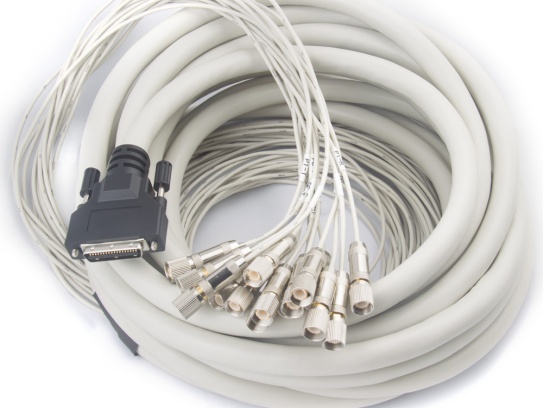
Meta Description: Discover our premium Flexible Micro-Coaxial Assemblies—engineered for high-frequency signal integrity, durability, and versatility in aerospace, medical, telecom, and robotics applications. What Are Flexible .
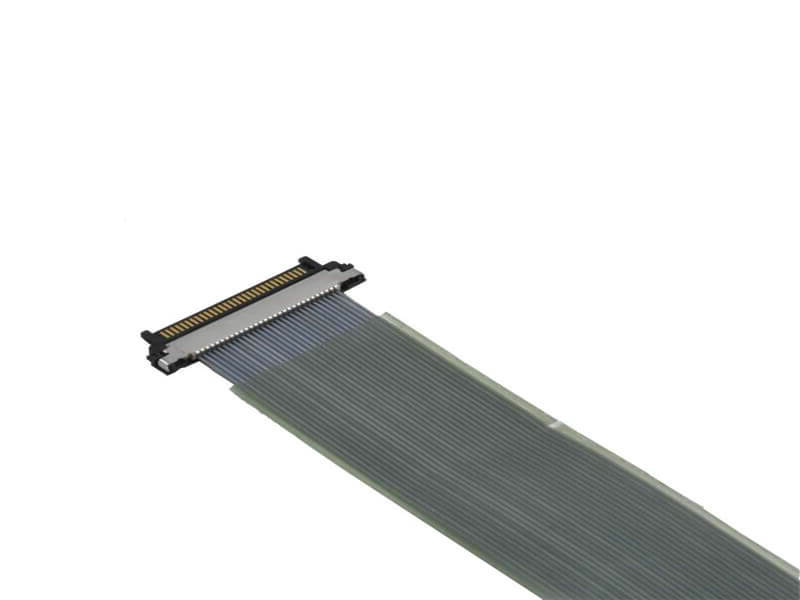
KEL’s Micro Coaxial Cable solutions are at the forefront of modern electronic connectivity, offering exceptional performance in high-speed data transmission, miniaturization, and reliability. These connectors are integral to various.
Feel free to reach out to us for any inquiries or orders