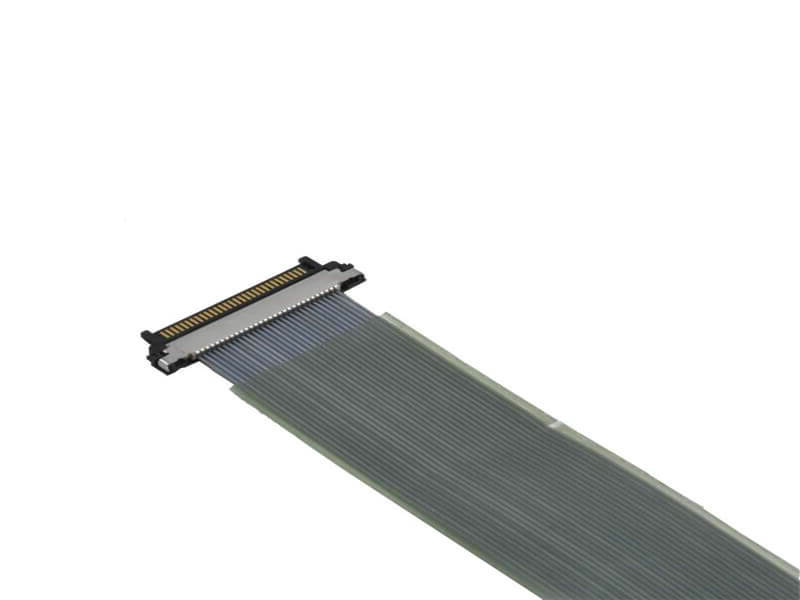
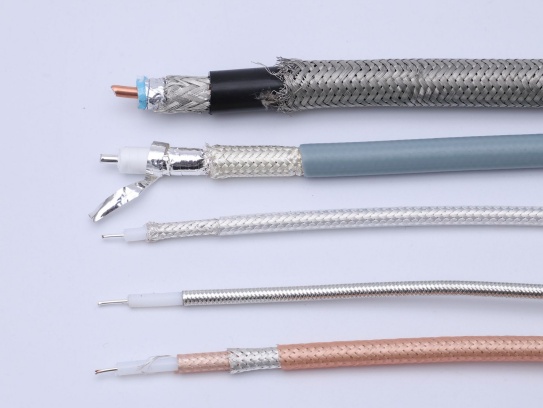
In high-speed, high-density electronic systems, the micro coaxial cableis the workhorse that carries critical RF, high-speed digital, and video signals. However, the mere presence of a high-quality cable is not enough. The point where that cable meets a PCB, module, or connector—the micro coaxial cable termination—is often the decisive factor in whether a design meets its performance, reliability, and manufacturability targets.
This article explores what a micro coaxial cable termination solution truly is, why it is more than just a mechanical connection, and how a well-engineered termination directly improves signal integrity (SI) in real-world applications.
What Is a Micro Coaxial Cable Termination Solution?
A micro coaxial cable termination solutionrefers to the complete set of design choices, connectorization methods, PCB features, and manufacturing processes that connect the fine coaxial conductor to the rest of the system while preserving its transmission-line characteristics.
It encompasses more than just a connector; it is a system-level solution that includes:
- Connector or Direct-Attach Method:The physical interface, such as a board-to-board micro-coax connector (e.g., I-PEX CABLINE®, MHF series), a coaxial RF connector (e.g., SMA, MCX), or a direct solder termination to a PCB pad or paddle card.
- Cable Preparation and Geometry Control:The precision stripping of the cable’s insulation, shield, and center conductor to exact dimensions, ensuring the impedance and geometry are preserved up to the point of termination.
- PCB Interface Design:The landing pattern, pad stack-up, reference planes, and via transitions that the termination connects to, all of which must be designed to maintain a controlled impedance.
- Shielding and Grounding Strategy:How the cable’s shield is terminated to the PCB ground, including the use of ground vias, stitching, and chassis connections to manage EMI and control return currents.
- Mechanical Strain Relief and Routing:The physical support structure that prevents the fragile micro-coax from being bent, pulled, or twisted beyond its limits during assembly, handling, or thermal cycling.
- Process Control and Quality Assurance:The manufacturing processes, including automated cutting, stripping, crimping, or soldering, along with inspection methods (e.g., microscopy, electrical testing) that ensure each termination meets specification.
In high-performance systems, a termination solution is often customized for a specific application, balancing electrical performance, size, and manufacturability.
Why Termination Is Critical for Signal Integrity
Micro-coax cables are designed as precision transmission lines with a controlled characteristic impedance, typically 50 Ωfor RF/microwave and high-speed digital, or 75 Ωfor video/broadcast. Any discontinuity at the termination point—such as an impedance mismatch, an impedance bump, or an unintended stub—can cause signal reflections, degrade eye diagrams, and increase bit error rates.
A well-designed termination solution minimizes these discontinuities by ensuring a smooth transition from the cable to the PCB or connector. This involves matching the impedance of the cable, connector, and PCB landing, and controlling the return loss and insertion loss across the operating frequency range.
How Poor Termination Degrades Signal Integrity
A suboptimal termination can lead to several SI problems:
- Reflections and Standing Waves:Mismatched impedance causes part of the signal to reflect back, creating standing waves. This results in ripple in the insertion loss and reduces the effective signal amplitude.
- Increased Insertion Loss:Poor control of the transition geometry can increase dielectric and conductor losses, especially at high frequencies due to the skin effect.
- Crosstalk and EMI Susceptibility:An improperly terminated shield can act as an antenna, radiating noise or picking up interference. In multi-channel systems, crosstalk between channels can also increase.
- Impedance Discontinuities:Features like a poorly designed pad, an acute bend near the termination, or an unoptimized via can create localized impedance bumps, degrading eye height and timing margins.
Key Elements of a High-Performance Termination
- Impedance Continuity:The geometry of the pad, via, and connector footprint must be designed to match the cable’s characteristic impedance. This often involves fine-tuning the PCB stack-up and dielectric thickness.
- Shielding and Grounding:The shield must be terminated to a solid ground plane with minimal inductance. This is achieved using multiple ground vias (stitching vias) close to the pad and ensuring a low-impedance ground reference for the connector shell.
- Mechanical Strain Relief:Micro-coax is fragile. A termination solution must include strain relief, such as a rigid support structure or adhesive, to prevent the conductor from being stressed during flexing or thermal expansion.
- Precision Manufacturing:The small size of micro-coax (e.g., 36–42 AWG) demands high-precision processes. Automated equipment is often required for cutting, stripping, and terminating to ensure repeatability and quality.
Trade-Offs in Termination Architecture
Designers can choose from several architectural approaches, each with its own trade-offs:
- Connectorized (Discrete Connector):Offers modularity and serviceability. The trade-off is additional cost and a small amount of insertion loss and parasitic capacitance.
- Direct Solder to PCB:Minimizes connectors and length, improving performance. However, it can be challenging to service and requires high-precision assembly processes.
- Paddle Card / Interposer:A small PCB that the micro-coax is terminated to, which then plugs into a main board. This simplifies cable routing and can improve shielding, but adds an extra high-speed interconnect.
SI Metrics Improved by Good Termination
A high-quality termination solution directly improves key SI metrics:
- Return Loss (RL):A good termination maintains a high return loss (e.g., >15 dB) up to the target frequency, indicating minimal reflections.
- Insertion Loss (IL):By controlling impedance and minimizing discontinuities, the solution reduces unnecessary IL, especially at high frequencies.
- Eye Diagram and Jitter:In high-speed digital systems, a clean termination results in a wide, open eye and low jitter, which are critical for reliable data transmission.
- EMI/EMC Performance:A well-grounded shield and a controlled impedance path reduce radiated emissions and improve immunity to external noise.
Application-Specific Considerations
Different applications place different demands on termination solutions:
- Medical Imaging (e.g., Ultrasound):Requires high channel counts (100s of micro-coax cables), excellent SI, and reliability for millions of flex cycles. Solutions often use direct wiring to a paddle card for optimal performance.
- Telecom/Data Centers:Prioritize low loss, high density, and repeatability. Solutions often use high-performance micro-coax assemblies with low-profile connectors that fit under heat sinks.
- Automotive/Industrial:Demand robust mechanical performance, including resistance to vibration, temperature cycling, and moisture. Solutions may include sealed connectors and ruggedized cable constructions.
Conclusion
A micro coaxial cable termination solutionis a critical system-level feature that determines whether a design can achieve its performance goals. By focusing on impedance continuity, shielding, mechanical integrity, and precision manufacturing, engineers can unlock the full potential of micro-coax cables, ensuring reliable, high-performance signal transmission in even the most demanding applications.