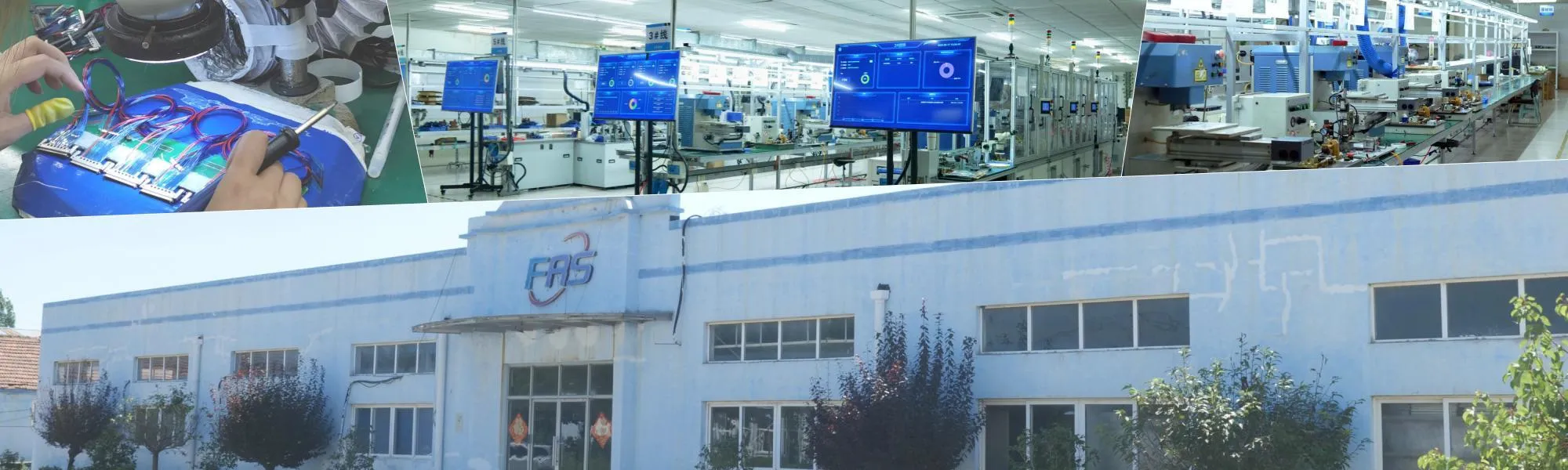
Micro Coaxial Cable factory-(FRS)
Time Domain Reflectometry (TDR) is a powerful electrical test method that sends a fast voltage step down a transmission line and analyzes the reflections caused by impedance changes. In micro coaxial cable quality control, TDR is used to detect and locate faults, verify impedance consistency, and ensure the cable assembly meets specifications before it is shipped or installed.
Micro coaxial cables are widely used in high-frequency applications like 5G, medical imaging, automotive radar, and test equipment, where signal integrity is paramount. Even minor defects can cause significant signal reflections, leading to data errors or system failures. TDR provides a fast, non-destructive way to inspect the internal structure of the cable, making it a critical tool for quality control.
TDR operates on the principle that any change in a cable’s characteristic impedance (Z₀) will cause a portion of the signal to reflect back to the source. The instrument measures the time it takes for this reflection to return and calculates the distance to the impedance discontinuity.
Distance = (Velocity × Δt) / 2 (The division by 2 accounts for the signal’s round trip.)ρ = (Z_L - Z₀) / (Z_L + Z₀) where Z_L is the load impedance at the point of discontinuity. This results in distinct TDR signatures for different faults.TDR is exceptionally good at revealing the “shape” of a cable’s impedance profile. Here are the common signatures and their meanings in a micro coaxial cable.
| Fault Type | TDR Signature | Typical Causes |
|---|---|---|
| Open Circuit | A sharp, positive reflection (same polarity as the incident pulse). | A broken center conductor or a poorly crimped connector. |
| Short Circuit | A sharp, negative reflection (opposite polarity). | The center conductor is touching the shield. |
| High Impedance / Partial Open | A smaller positive reflection. | A crushed or kinked section, or a connector with poor contact. |
| Low Impedance / Partial Short | A smaller negative reflection. | Moisture ingress or damaged insulation causing a partial short. |
| Connector / Transition | A small, often double-peaked reflection at a specific, fixed distance. | The transition from the cable to the connector, or between different cable sections. |
| Water Ingress | A gradual, negative-going reflection that increases in loss over distance. | Moisture penetrating the dielectric, changing its permittivity. |
A robust TDR-based QC process typically involves the following steps:
TDR is often used alongside other RF tests for a comprehensive QC strategy. While TDR provides spatial information in the time domain, other instruments offer detailed frequency-domain data.
| Test Method | Domain | What it Measures | Complementary Role with TDR |
|---|---|---|---|
| TDR | Time Domain | Impedance vs. Distance | Pinpoints the locationof impedance issues. |
| VNA | Frequency Domain | Insertion Loss, Return Loss, VSWR | Measures performanceacross the operating bandwidth. |
| Shielding Effectiveness | Frequency Domain | EMI protection | Assesses how well the cable blocks external interference. |
| PIM Testing | Frequency Domain | Intermodulation Distortion | Evaluates non-linearity in passive components under high power. |
Our factory offers high-quality products at competitive prices
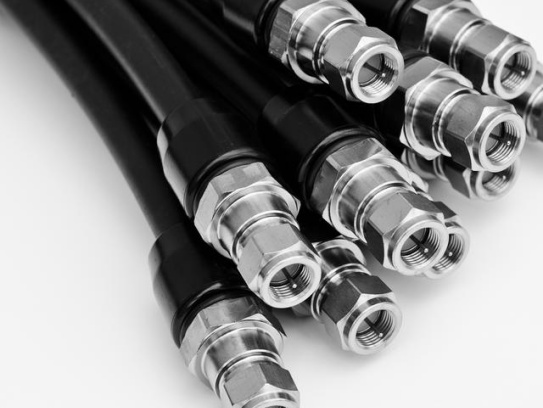
Meta Description: Discover the advanced features and benefits of Industrial Micro-Coaxial Wiring—engineered for precision, durability, and high-speed signal transmission in industrial environments. What is Industrial Micro-Co.
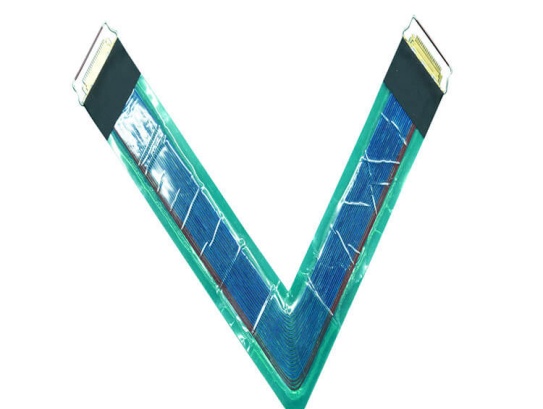
IntroductionThe High-Temperature Resistant Micro-Coaxial Cable is a cutting-edge connectivity solution engineered to deliver exceptional performance in extreme thermal environments. Combining precision engineering with advanced mate.
Feel free to reach out to us for any inquiries or orders