Micro Coaxial Cable for Drone Camera: The Invisible Backbone of High-Quality Aerial Video - Micro Coaxial Cable factory-(FRS)
Micro Coaxial Cable factory-(FRS)
INFO
When you see crisp 4K or even 8K footage from a racing drone, the credit often goes to the camera sensor and the video transmitter. However, a tiny but critical component—the micro coaxial cable—is quietly working inside the drone to ensure every pixel arrives intact. This article explains what a micro coaxial cable is, why it’s essential for drone cameras, and how to choose the right one for your project.
What Is a Micro Coaxial Cable?
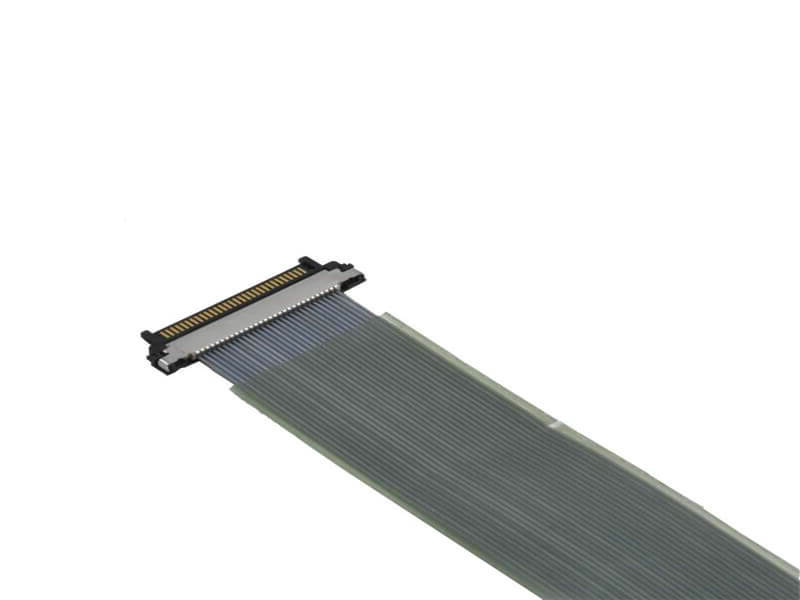
A micro coaxial cable(or micro coax) is a very thin, high-frequency cable. Each signal line has its own center conductor, insulation, shielding layer, and outer jacket. This structure provides a controlled impedance (typically 50 Ω or 75 Ω), low loss, and excellent electromagnetic interference (EMI) resistance.
Key features include:
Ultra-thin:Diameters range from 0.25 mm to 1 mm, ideal for tight spaces.
High performance:Supports Gbps-leveldata rates for MIPI, LVDS, and other high-speed video signals.
Flexible:Can be bent and routed precisely within compact devices like smartphones and drones.
Why Drone Cameras Rely on Micro Coax
In a drone, the camera module connects to the image processing board or video transmitter via a micro coax cable assembly. This is crucial for several reasons:
High-Resolution, High-Frame-Rate Video Modern drone cameras often use MIPI CSI-2 interfaces with data rates of several Gbps. Standard wires or FPC cables suffer from signal loss, crosstalk, and EMI at these speeds. Micro coax, with its individual shielding, maintains signal integrity over short distances, ensuring stable 4K/60fps or even 8K video transmission.
Harsh Operating Environments Drones experience constant vibration, rapid acceleration, and wide temperature swings. The robust construction of a micro coax—featuring a fine stranded center conductor and multi-layer shielding—provides the durability needed for reliable performance in these conditions.
Space and Weight Constraints Every gram matters for flight time and maneuverability. Micro coax is significantly lighter and thinner than traditional coax, allowing for more compact and aerodynamic drone designs.
EMI/EMC Challenges The drone’s motors, ESCs, and wireless links create a noisy electromagnetic environment. The superior shielding of micro coax minimizes interference, preventing image artifacts like flickering or stripes.
Micro Coax vs. Other Cables
Understanding the differences helps in selecting the right cable for your drone camera.
Feature
Micro Coaxial Cable
FPC / Ribbon Cable
Standard Coaxial Cable
Shielding
Individual, per signal
None or minimal
Single shield for all signals
EMI Resistance
Excellent
Poor
Good
Signal Integrity
High (low loss, low crosstalk)
Degrades at high speeds
Good over longer distances
Flexibility
Good for tight bends
Flexible, but limited in tight spaces
Stiff, not ideal for complex routing
Size/Weight
Very small and light
Thin and light
Larger and heavier
Key Clarification:LVDS (Low-Voltage Differential Signaling) is a signaling standard, not a cable type. Micro coax is an excellent physical mediumfor carrying LVDS and MIPI signals due to its impedance control and shielding.
Key Parameters for Drone Camera Micro Coax
When selecting a micro coaxial cable, consider these critical factors:
Impedance:Match the system requirement, typically 50 Ωfor digital video. Consistency from cable to connector is vital to prevent signal reflections.
Attenuation (Loss):This increases with frequency and cable length. For a 15–20 cm run in a drone, high-quality micro coax can maintain excellent signal quality for multi-Gbps signals.
Shielding Effectiveness:Look for cables with robust shielding (e.g., braid + foil) to combat EMI from motors and other electronics. Grounding is equally important.
Mechanical Properties:The cable must withstand repeated bending. Specify the minimum bend radius and flex life. Consider the cable’s temperature rating for high-heat environments.
Connector Compatibility:The most common connectors are micro coax types like I-PEX (MHF), Hirose DF36/DF81, and JAE FI-R/FI-X. A poor connection can ruin the signal, so choose a reputable manufacturer with proven crimping and testing processes.
Design Tips for Using Micro Coax in Drones
Keep It Short:Minimize cable length to reduce signal loss and reflections. Place the image processing board as close to the camera as possible.
Mind the Bends:Avoid sharp, repeated bends. Follow the manufacturer’s recommended minimum bend radius to prevent damage to the shielding and conductors.
Ensure a Solid Ground:A continuous ground plane and proper connector grounding are essential for EMI performance. Avoid daisy-chaining ground connections.
Choose the Right Connector:Select a connector that matches your PCB layout, current needs, and desired cable exit angle. Reliability is more important than saving a few cents.
Test Thoroughly:Perform high-speed signal integrity tests and real-world flight tests. Vibration tests are crucial for racing or industrial drones to ensure long-term reliability.
🎯Matching Cable to Your Drone Application
Consumer / Racing Drones:Prioritize lightweight, high flexibility, and cost-effectiveness. Focus on 1-3 meter digital video links (e.g., MIPI, LVDS) with robust shielding.
Professional / Industrial Drones:Emphasize reliability and environmental resistance. Look for cables rated for wider temperature ranges, higher flex cycles, and resistance to moisture or chemicals.
Miniature / Toy Drones:Every millimeter counts. Use the thinnest, lightest micro coax possible while ensuring it meets the signal integrity requirements of your camera.
Conclusion
The micro coaxial cableis a critical, yet often overlooked, component in a drone camera system. By understanding its role and key selection parameters, you can significantly improve your drone’s image quality, stability, and overall performance.
If you’re designing a new drone or upgrading an existing one, consider investing in high-quality micro coax cable assembliesfrom a reputable supplier. The right cable can be the difference between a frustrating, glitchy video feed and crystal-clear aerial footage.
There is no fixed weight for standard coaxial cable assemblies, as it is determined by multiple key factors. Understanding these factors and practical weight references is crucial for engineers, purchasers, and anyone involved in select...
Introduction: The Unsung Heroes of Clear Diagnosis
When we marvel at the detailed images produced by MRI machines, CT scanners, or ultrasound devices, we often focus on the sophisticated software and powerful magnets or transducers. ...
Why Micro Coaxial Cable Maintenance MattersMicro coax cables (typically 0.5mm to 2mm in diameter) are prone to wear and tear due to their thin conductors and shielding layers. Neglecting maintenance can lead to:
Signal degradation...
Industrial grade micro coaxial cable is an ultra‑thin, high‑performance RF interconnect built for demanding applications that require precise impedance control, high‑density routing, and long‑term reliability under mechanical and enviro...
A coaxial cable is a type of cable widely used in communication and data transmission. Its core structure consists of four concentric layers:Central Conductor: Typically a single or stranded copper wire for transmitting electrical sig...
Understanding Velocity Factor (VF) is crucial for designing and implementing RF systems using micro coaxial cables. Also known as the velocity of propagation (VP), it represents the speed at which an electrical signal travels along...
In the field of modern healthcare, medical imaging equipment stands as a cornerstone of accurate diagnosis and effective treatment. From X-ray machines that reveal bone fractures to high-resolution MRI scanners that map soft tissue stru...
The short answer is yes, coaxial cable assemblies can be recycled after use—but the process requires careful handling due to their composite structure. As the world grapples with the growing problem of electronic waste (e-waste), recycl...
Coaxial Cable Assemblies (CCAs) are critical components in countless systems—from consumer electronics (e.g., TV antennas, Wi-Fi routers) to industrial automation, aerospace, and medical equipment. Their performance directly determines ...
Why VR headsets need low loss micro coaxial cable
High‑resolution, high‑frame‑rate VR depends on moving massive amounts of image data across very short, highly constrained interconnects inside the headset. Traditional FPC/FFC or roun...
Endoscopes: Enabling High-Definition VisualizationA. Signal Transmission RequirementsEndoscopic cameras and sensors demand ultra-reliable transmission of high-frequency video signals (up to 6 GHz) through tight,弯曲的通道. Micro co...
Meta Description: Understand critical vibration testing standards (MIL-STD, IEC) for micro coaxial cables. Ensure reliability in aerospace, automotive, medical & consumer tech. Learn requirements here.
H1: What Are the V...
Micro coaxial cable assemblies are essential components in countless modern devices, enabling high-frequency signal transmission in compact spaces – from smartphones and medical imaging equipment to aerospace systems and automotive sens...
Coaxial cable, often recognized by its distinctive round shape and threaded metal connector (F-type or BNC), might seem like a relic from older CCTV systems. Yet, coaxial cable remains a relevant, reliable, and often preferable choice&...
Self-driving cars are marvels of modern technology, relying on a complex array of eyes and ears – sensors like cameras, radar, LiDAR, and ultrasonics – to perceive the world. But what carries the massive amounts of data these sensors ge...
In the relentless push for smaller, faster, and more powerful electronics – from cutting-edge medical devices and aerospace systems to next-gen telecommunications and high-resolution imaging – high-density micro-coaxial cable bundles&n...
Getting those critical radio frequency (RF) signals – whether in your satellite communication equipment, medical scanner, drone control link, or tiny IoT sensor – from point A to point B without degradation is non-negotiable...
Introduction: The Critical Role of TDR in Micro-Coax IntegrityTime Domain Reflectometry (TDR) testing is the cornerstone of ensuring signal integrity and reliability in modern micro-coaxial cable networks. As devices shrink and data rat...
When designing cable systems for aircraft, satellites, and spacecraft, engineers often search for information on “high temperature resistant micro coaxial cable for aerospace”. This article explains what these cables are, why they are c...
Automotive electronics—from advanced driver-assistance systems (ADAS) and infotainment to powertrain controls—rely on coaxial cable assemblies to transmit high-frequency signals reliably. Unlike consumer electronics, automotive environm...
Coaxial cables are a fundamental component in modern communication systems, widely used in applications ranging from television broadcasting to computer networking. The model numbers assigned to coaxial cables are not arbitrary; they en...
In the realm of high-speed signal transmission, two cable types stand out for their widespread use in modern electronics: micro coaxial cable and LVDS (Low-Voltage Differential Signaling) cable. From smartphones and laptops to industria...
You use Starlink for video calls, streaming, or staying connected off-grid. But have you ever wondered how thousands of satellites overhead work flawlessly in the brutal environment of space? One unsung hero is surprisingly sm...
Choosing the right micro-coaxial cable isn’t just a detail in drone design and operation; it’s a critical factor impacting video transmission reliability, control signal integrity, weight, and ultimately, the success of your...
RF cable assemblies are critical components in telecom infrastructure, enabling reliable signal transmission across networks. From 5G base stations to data centers, these assemblies connect antennas, transceivers, and other equipment, d...
Coaxial cables are crucial for transmitting high-frequency electrical signals with minimal interference. This article offers an overview of their specifications and technical data.
1. Structure of Coaxial Cables
A coaxial cable ...
Coaxial cable assemblies are critical components in telecommunications, aerospace, automotive electronics, and industrial control systems. As global environmental regulations tighten and market demand for sustainable products grows, obt...
Compact Structure and Precision EngineeringMicro coaxial cables are distinguished by their miniature size, typically with outer diameters ranging from 0.25 mm to 2 mm. Despite their small footprint, they maintain a layered structure s...
As the telecom industry marches toward 6G—targeting terabit-per-second data rates, sub-millisecond latency, and 100x higher connection density than 5G—every component in the network ecosystem faces unprecedented demands. Among these, mi...
Subtitle: Why this “old” technology is still critical for modern cities like Seoul and Chicago.
Coaxial cable (coax) might seem like yesterday’s tech, but it plays a vital – and surprisingly cost-effective – role...
Radar Systems: Precision Signal TransmissionA. Phased Array AntennasSemi-rigid cables are widely used in military and aerospace radar arrays due to their ability to maintain consistent phase relationships across thousands of elemen...
Introduction: The Battlefield Connectivity Imperative
Modern warfare demands unprecedented mobility from soldiers, who routinely carry 15+ kg of electronic gear. Traditional coaxial cables force critical compromises between durabili...
In modern technology, micro coaxial cables are vital for seamless data transmission and signal integrity. With their concentric design, they handle high-frequency signals with low loss and interference. As tech advances, their demand su...
In the digital age, the demand for high-speed data transmission has become insatiable. Modern networks, whether in data centers, offices, or homes, rely heavily on efficient data transfer to support a wide range of applications, from cl...
(Perfectly optimized for SEO & user understanding)
When you picture an autonomous vehicle (AV), you likely imagine sophisticated cameras, spinning LiDAR sensors, powerful processors, and complex AI algorithms. Rarely do we think ...
In response to the growing global demand for sustainable waste management and the urgent need to reduce electronic waste (e-waste), our factory is proud to announce the official launch of our Coaxial Cable Recycling Program. This initia...
Telecommunications and 5G NetworksMicro coaxial cables play a pivotal role in high-frequency communication systems:
5G mmWave Infrastructure:Used in base stations, small cells, and antennas for transmitting 24–100 GHz mmWave sig...
In the world of theater, sound is not just an accessory—it’s a storytelling tool that breathes life into performances. A single note from a violin, a whispered line from an actor, or the roar of a crowd in a musical number must reach ev...
The global transition toward smart grids is revolutionizing how we generate, distribute, and consume utilities. At the heart of this transformation are Advanced Metering Infrastructure (AMI) systems, commonly known as smart metering sys...
Military-grade micro-coaxial cables are critical components in defense systems, aerospace technology, and advanced communication networks. At the heart of their performance lies the dielectric material, which ensures signal integrity, ...
KEL’s Micro Coaxial Cable solutions are at the forefront of modern electronic connectivity, offering exceptional performance in high-speed data transmission, miniaturization, and reliability. These connectors are integral to various.
OverviewMicro-Coax for HD Video is a cutting-edge coaxial cable engineered to deliver uncompromised high-definition video quality across professional and industrial applications. Designed for reliability, precision, and versatility,.
Contact Us Micro Coaxial Cable factory-(FRS).
Feel free to reach out to us for any inquiries or orders