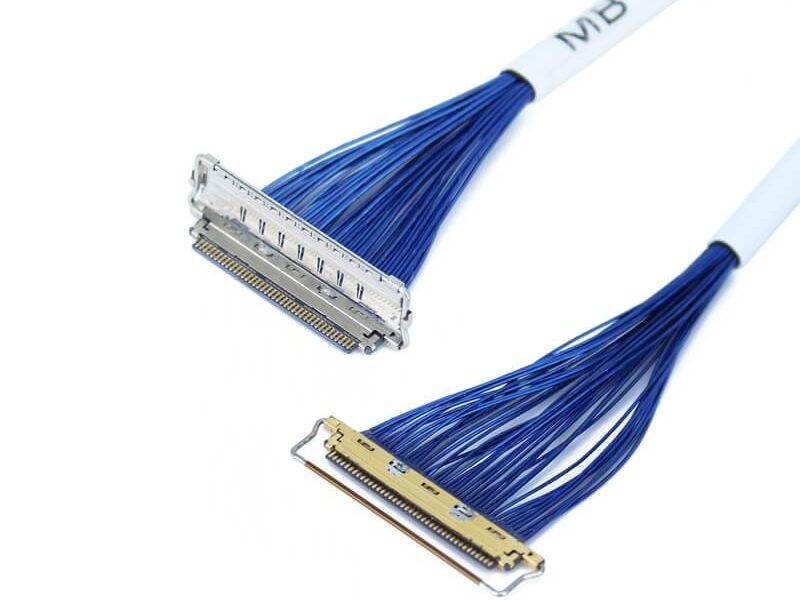
Introduction In today’s fast-paced digital world, reliable and high-speed data transmission is critical for industries ranging from telecommunications to aerospace. Enter High-Speed Data Micro-Coax—a cutting-edge miniature coaxial cable engineered to deliver ultra-low loss, high-frequency signal integrity in compact, space-constrained environments. This product introduction dives deep into its features, applications, and why it’s the go-to choice for engineers and designers demanding precision and durability.
Key Features of High-Speed Data Micro-Coax
Ultra-Low Signal Loss Designed with advanced dielectric materials and precision shielding, our micro-coax minimizes signal attenuation even at frequencies up to 40 GHz. This ensures crisp, uninterrupted data transfer for high-speed applications like 5G networks, radar systems, and medical imaging devices.
Compact and Flexible Design With an outer diameter as small as 0.81 mm, this micro-coax excels in tight spaces without compromising flexibility. Its lightweight, bend-resistant construction makes it ideal for intricate PCB layouts, wearable tech, and drone-mounted sensors.
Superior Shielding Efficiency Featuring dual-layer shielding (foil + braid), the cable achieves **>90% noise reduction**, safeguarding signals against electromagnetic interference (EMI) and cross-talk in high-density electronic assemblies.
Wide Temperature Range Built to withstand extreme conditions, the cable operates reliably in temperatures from **-55°C to +200°C**, making it suitable for aerospace, automotive, and industrial automation applications.
Customizable Configurations Available in various AWG sizes (30 to 44), impedance options (50Ω, 75Ω), and connector types (SMA, MMCX, SMP), our micro-coax can be tailored to meet specific project requirements.
Applications
Telecommunications: 5G base stations, fiber-optic repeaters, and satellite communication systems.
Medical Technology: MRI machines, endoscopes, and portable diagnostic tools.
Aerospace & Defense: Avionics, UAVs, and radar/EW systems.
Automotive: ADAS sensors, infotainment systems, and EV battery monitoring.
Industrial IoT: Robotics, factory automation, and high-speed data acquisition.
Technical Specifications
Conductor: Silver-plated copper-clad steel (SPCCS) for optimal conductivity.
Insulation: Foamed PTFE for low dielectric constant.
Micro coaxial cables are widely used in various electronic devices due to their excellent signal transmission capabilities and compact size. However, soldering micro coaxial cable connections can be a tricky task, especially for beginne...
Micro coaxial cables are the unsung heroes of modern electronics, enabling clear signals in everything from smartphones and medical devices to aerospace systems and automotive sensors. But their tiny size makes their shielding effectiv...
Introduction:That dreaded moment: you notice interference in your video signal, crackling in your audio, or a complete drop in your network connection. Upon inspection, you find a nick, tear, or exposed wire in the outer shielding of yo...
Micro coaxial cables (micro coax) are the hidden heroes of our digital lives. Found inside smartphones, laptops, cameras, drones, and countless other devices, these tiny cables carry crucial video signals (like HDMI or camera feeds) and...
Laboratory equipment, such as spectrum analyzers, signal generators, and network analyzers, relies heavily on precise signal transmission to ensure accurate test results. Coaxial cable assemblies serve as the critical link in this proce...
Coaxial cable assemblies are critical components in signal transmission systems, used across industries like telecommunications, aerospace, medical equipment, and industrial automation. Their bandwidth capacity—defined as the maximum fr...
Coaxial cables are the unsung heroes of modern connectivity, powering everything from home televisions and internet routers to security cameras and satellite systems. Their unique design—featuring a central conductor, insulating layer, ...
Coaxial cable assemblies are critical components in industries like telecommunications, aerospace, and medical equipment, where signal integrity and reliability directly impact system performance. Certification serves as a guarantee tha...
Introduction: The Unsung Heroes of Clear Diagnosis
When we marvel at the detailed images produced by MRI machines, CT scanners, or ultrasound devices, we often focus on the sophisticated software and powerful magnets or transducers. ...
Micro coaxial cables are essential components in modern electronics, enabling high-speed signal transmission in compact devices like smartphones, medical equipment, cameras, and wearables. However, their small size makes them particular...
Electric Vehicles (EVs) promise a cleaner, quieter future, but their complex high-voltage battery packs require constant, precise monitoring to ensure safety, performance, and longevity. At the heart of this critical task lies the Batte...
Routing micro-coaxial cables in tight spaces is a common challenge in modern electronics, aerospace, medical devices, and robotics. These tiny cables are essential for high-frequency signal transmission but require careful handling to a...
Automotive electronics—from advanced driver-assistance systems (ADAS) and infotainment to powertrain controls—rely on coaxial cable assemblies to transmit high-frequency signals reliably. Unlike consumer electronics, automotive environm...
Coaxial cable assemblies are widely used in communication, aerospace, medical equipment, and other fields, and their connector performance directly affects signal transmission quality. Over time, dust, oil, oxidation, and other contamin...
Micro-coaxial power lines pack impressive power transfer into tiny spaces. But pushing high voltages through these miniature channels creates a critical challenge: preventing dangerous electrical discharges and ensuring safe, reliable ...
Coaxial Cable Assemblies (CCAs) are critical components in countless systems—from consumer electronics (e.g., TV antennas, Wi-Fi routers) to industrial automation, aerospace, and medical equipment. Their performance directly determines ...
Coaxial cables are the unsung heroes of many critical systems, from home TV setups and broadband networks to security cameras and industrial communication systems. These cables transmit high-frequency signals with minimal loss, but over...
In the world of modern connectivity, coaxial cables play a crucial role in transmitting audio, video, and data signals. Whether it’s for your home entertainment system, internet connection, or security cameras, a damaged coaxial c...
In the high-stakes world of military operations, reliable communication isn’t just convenient – it’s mission-critical and often life-saving. When every gram, millimeter, and split-second counts, micro coaxial cables em...
Key Changes in the 2024 Revision
Extended Frequency Range: New testing requirements now cover up to 110 GHz (previously 67 GHz) to accommodate 6G and automotive radar applications
Stricter Impedance Tolerance: ±3Ω uniformity requ...
High-Frequency Communication & 5G Antenna ModulesMicro coaxial cables are widely used in 5G base stations and mobile devices for high-frequency signal transmission due to their low signal loss, supporting efficient millimeter-wave...
What Are Medical Ultra-Fine Coaxial Cables?Ultra-fine coaxial cables are specialized cables designed for high-frequency signal transmission in compact environments. Unlike standard coaxial cables, they feature:
Microscopic Diameter...
In the realm of public safety communications, reliability and performance are non-negotiable. Coaxial cables have long been a cornerstone in ensuring seamless and secure transmission of data, voice, and video, playing a crucial role in ...
In the operating rooms of today, surgical robots have redefined the boundaries of precision and minimally invasive care—navigating tortuous vascular pathways, performing millimeter-scale tissue resections, and transmitting real-time 4K ...
As 5G New Radio (NR) networks push into FR2 bands—spanning 24.25 GHz to 40 GHz and beyond—the performance of every interconnect in the RF front-end is under unprecedented scrutiny. Among these, the micro coaxial cable termination soluti...
When it comes to data transmission, coaxial cables and fiber optics are two common options, but they have significant differences. Understanding these differences can help you choose the right one for your needs.
Transmission Medium
...
In the fast-paced world of technology, the quest for more efficient and reliable signal transmission is unending. One of the recent breakthroughs in this area comes in the form of new diamond-coated micro-coaxial cables, which have the ...
In the realm of modern communication and electronic systems, coaxial cables stand as vital components, facilitating the transmission of signals in various applications such as television, internet, and radio. However, these cables are h...
In the world of high – performance electronics, especially in military, aerospace, and other critical applications, micro – coaxial cables play a pivotal role. These cables are designed to transmit high – frequency sig...
In high-resolution camera modules, where every 0.01 mm counts, the choice of interconnect is critical. The AWG42 micro coaxial cableis a proven solution for transmitting high-frequency video and control signals in ultra-compact spaces. ...
Micro coaxial cables, the unsung heroes of compact, high-frequency electronics, are critical for transmitting signals with minimal degradation. Among their key performance parameters, insertion loss is paramount. Understanding the...
For ham radio operators and amateur communicators, the coaxial cable is far more than a “connecting wire”—it is the lifeline of signal integrity. A poorly chosen or installed coaxial cable can lead to significant signal loss...
Microwave links play a pivotal role in modern communication systems, enabling high-speed data transmission across long distances without the need for physical fiber-optic cables or terrestrial wiring. From telecommunications networks an...
In the ever-evolving landscape of radar technology, every component plays a pivotal role in determining the system’s efficiency, accuracy, and range. Among these components, coaxial cables stand out as a linchpin for seamless oper...
The manufacturing of coaxial cables involves complex processes with inherent risks, from high-voltage testing to mechanical operations. As industry regulations tighten and technological advancements emerge, manufacturers are adopting co...
In high-density electronic devices, reliable signal transmission in tight spaces is non-negotiable. That’s why professional buyers turn to a micro coaxial cablesupplier that combines factory-direct pricing, precise customization, and re...
If you’re working with RF (radio frequency) systems, antennas, or small-scale electronics, chances are you’ve encountered RG-174 micro-coaxial cables. These thin, flexible cables are popular for their low loss and durability in tight s...
In the realm of radio communications, high-frequency coaxial cables play a pivotal role in ensuring efficient and reliable signal transmission. As technology continues to advance, the demand for high-quality coaxial cables capable of ha...
In the ever – evolving field of coaxial cable manufacturing, the adoption of new materials has become a key driver of progress. Our company is proud to be at the forefront of this innovation by integrating a cutting – edge n...
OverviewMicro-Coax for HD Video is a cutting-edge coaxial cable engineered to deliver uncompromised high-definition video quality across professional and industrial applications. Designed for reliability, precision, and versatility,.
In LVDS (Low Voltage Differential Signaling) display systems, Micro-coaxial Cable (also referred to as Micro Coax Cable) stands out as an optimal solution for high-resolution, high-reliability signal transmission. Designed to meet the str.
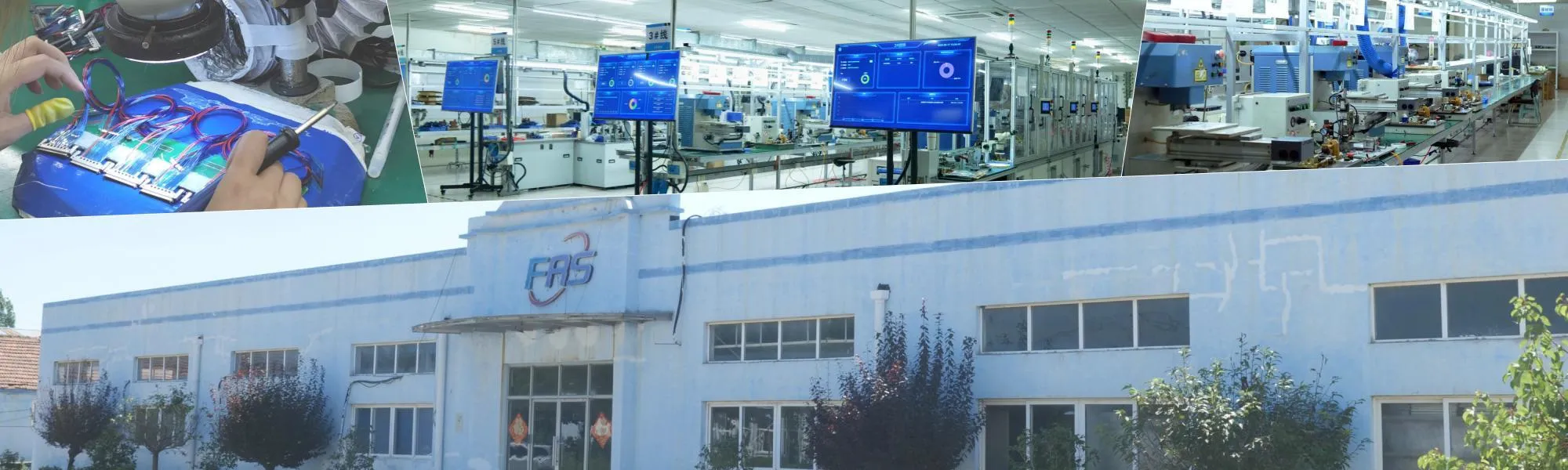
Contact Us Micro Coaxial Cable factory-(FRS).
Feel free to reach out to us for any inquiries or orders