Micro Coaxial Cable for Drone Camera: The Invisible Backbone of High-Quality Aerial Video - Micro Coaxial Cable factory-(FRS)
Micro Coaxial Cable factory-(FRS)
INFO
When you see crisp 4K or even 8K footage from a racing drone, the credit often goes to the camera sensor and the video transmitter. However, a tiny but critical component—the micro coaxial cable—is quietly working inside the drone to ensure every pixel arrives intact. This article explains what a micro coaxial cable is, why it’s essential for drone cameras, and how to choose the right one for your project.
What Is a Micro Coaxial Cable?
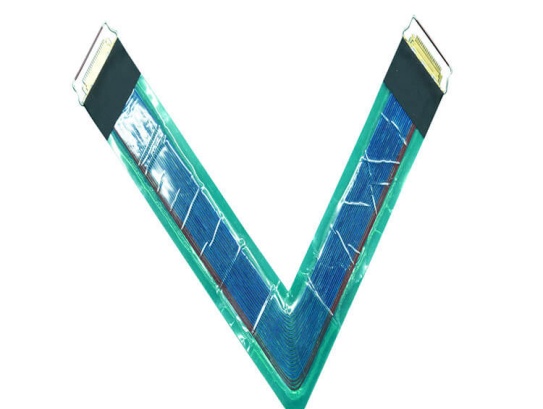
A micro coaxial cable(or micro coax) is a very thin, high-frequency cable. Each signal line has its own center conductor, insulation, shielding layer, and outer jacket. This structure provides a controlled impedance (typically 50 Ω or 75 Ω), low loss, and excellent electromagnetic interference (EMI) resistance.
Key features include:
Ultra-thin:Diameters range from 0.25 mm to 1 mm, ideal for tight spaces.
High performance:Supports Gbps-leveldata rates for MIPI, LVDS, and other high-speed video signals.
Flexible:Can be bent and routed precisely within compact devices like smartphones and drones.
Why Drone Cameras Rely on Micro Coax
In a drone, the camera module connects to the image processing board or video transmitter via a micro coax cable assembly. This is crucial for several reasons:
High-Resolution, High-Frame-Rate Video Modern drone cameras often use MIPI CSI-2 interfaces with data rates of several Gbps. Standard wires or FPC cables suffer from signal loss, crosstalk, and EMI at these speeds. Micro coax, with its individual shielding, maintains signal integrity over short distances, ensuring stable 4K/60fps or even 8K video transmission.
Harsh Operating Environments Drones experience constant vibration, rapid acceleration, and wide temperature swings. The robust construction of a micro coax—featuring a fine stranded center conductor and multi-layer shielding—provides the durability needed for reliable performance in these conditions.
Space and Weight Constraints Every gram matters for flight time and maneuverability. Micro coax is significantly lighter and thinner than traditional coax, allowing for more compact and aerodynamic drone designs.
EMI/EMC Challenges The drone’s motors, ESCs, and wireless links create a noisy electromagnetic environment. The superior shielding of micro coax minimizes interference, preventing image artifacts like flickering or stripes.
Micro Coax vs. Other Cables
Understanding the differences helps in selecting the right cable for your drone camera.
Feature
Micro Coaxial Cable
FPC / Ribbon Cable
Standard Coaxial Cable
Shielding
Individual, per signal
None or minimal
Single shield for all signals
EMI Resistance
Excellent
Poor
Good
Signal Integrity
High (low loss, low crosstalk)
Degrades at high speeds
Good over longer distances
Flexibility
Good for tight bends
Flexible, but limited in tight spaces
Stiff, not ideal for complex routing
Size/Weight
Very small and light
Thin and light
Larger and heavier
Key Clarification:LVDS (Low-Voltage Differential Signaling) is a signaling standard, not a cable type. Micro coax is an excellent physical mediumfor carrying LVDS and MIPI signals due to its impedance control and shielding.
Key Parameters for Drone Camera Micro Coax
When selecting a micro coaxial cable, consider these critical factors:
Impedance:Match the system requirement, typically 50 Ωfor digital video. Consistency from cable to connector is vital to prevent signal reflections.
Attenuation (Loss):This increases with frequency and cable length. For a 15–20 cm run in a drone, high-quality micro coax can maintain excellent signal quality for multi-Gbps signals.
Shielding Effectiveness:Look for cables with robust shielding (e.g., braid + foil) to combat EMI from motors and other electronics. Grounding is equally important.
Mechanical Properties:The cable must withstand repeated bending. Specify the minimum bend radius and flex life. Consider the cable’s temperature rating for high-heat environments.
Connector Compatibility:The most common connectors are micro coax types like I-PEX (MHF), Hirose DF36/DF81, and JAE FI-R/FI-X. A poor connection can ruin the signal, so choose a reputable manufacturer with proven crimping and testing processes.
Design Tips for Using Micro Coax in Drones
Keep It Short:Minimize cable length to reduce signal loss and reflections. Place the image processing board as close to the camera as possible.
Mind the Bends:Avoid sharp, repeated bends. Follow the manufacturer’s recommended minimum bend radius to prevent damage to the shielding and conductors.
Ensure a Solid Ground:A continuous ground plane and proper connector grounding are essential for EMI performance. Avoid daisy-chaining ground connections.
Choose the Right Connector:Select a connector that matches your PCB layout, current needs, and desired cable exit angle. Reliability is more important than saving a few cents.
Test Thoroughly:Perform high-speed signal integrity tests and real-world flight tests. Vibration tests are crucial for racing or industrial drones to ensure long-term reliability.
🎯Matching Cable to Your Drone Application
Consumer / Racing Drones:Prioritize lightweight, high flexibility, and cost-effectiveness. Focus on 1-3 meter digital video links (e.g., MIPI, LVDS) with robust shielding.
Professional / Industrial Drones:Emphasize reliability and environmental resistance. Look for cables rated for wider temperature ranges, higher flex cycles, and resistance to moisture or chemicals.
Miniature / Toy Drones:Every millimeter counts. Use the thinnest, lightest micro coax possible while ensuring it meets the signal integrity requirements of your camera.
Conclusion
The micro coaxial cableis a critical, yet often overlooked, component in a drone camera system. By understanding its role and key selection parameters, you can significantly improve your drone’s image quality, stability, and overall performance.
If you’re designing a new drone or upgrading an existing one, consider investing in high-quality micro coax cable assembliesfrom a reputable supplier. The right cable can be the difference between a frustrating, glitchy video feed and crystal-clear aerial footage.
Meta Description: Discover the best miniature coaxial cables for underwater robots. Learn about durability, waterproofing, and performance factors to ensure reliable subsea operations.
Underwater robots, such as remotely ope...
In industrial, commercial, and even residential settings, protecting electrical cables from physical damage, environmental hazards, and external interference is crucial for ensuring reliable performance and safety. Conduits and raceways...
Coaxial cable assemblies are the unsung heroes of modern connectivity, enabling reliable signal transmission in everything from home internet setups to heavy-duty industrial machinery. However, not all coaxial cable assemblies are creat...
Introduction
MIPI interfaces—MIPI DSIfor displays and MIPI CSI‑2for cameras—are now the default high‑speed, low‑power links in mobile, embedded, and automotive vision. Designers often encounter the term 90Ω micro coaxial cablewhen ro...
Coaxial cable assemblies are widely used in telecommunications, broadcast, and industrial applications for their ability to transmit high-frequency signals with minimal interference. However, poor signal quality—such as signal loss, noi...
In the complex web of modern electronic systems, ensuring seamless signal compatibility is a fundamental challenge. Signals come in diverse forms—analog and digital, with varying frequencies, amplitudes, and protocols—yet they often nee...
Choosing the perfect micro coaxial cable can feel overwhelming with so many options available. But fear not! Selecting the right one is crucial for ensuring your electronic devices or systems perform reliably. This guide breaks down the...
Understand Your Application RequirementsFrequency Range: Determine the operating frequency of your application (e.g., 1 GHz to 40 GHz). Higher frequencies require cables with low signal loss and stable impedance.Signal Integrity: ...
Micro-coaxial cables are the unsung heroes of modern electronics, carrying high-frequency signals in devices like cameras, drones, medical equipment, and complex AV setups. But they’re incredibly delicate. One wrong bend can creat...
Forget Wi-Fi signals in the vacuum of space. Getting data from a rover on Mars, images from a telescope orbiting Jupiter, or commands to a lunar lander relies on a surprisingly fundamental technology: space-grade coaxial cable (coax)....
Choosing the right cabling technology isn’t just about raw speed. In demanding environments like factory floors, aerospace systems, military deployments, oil & gas installations, and heavy transportation, cables face extreme c...
The Game-Changing Technology
Flexible micro-coaxial cables are revolutionizing electronics by allowing devices to bend and fold without breaking internal connections. These hair-thin cables (often thinner than 0.2mm) maintain strong ...
Self-driving cars are marvels of modern technology, relying on a complex array of eyes and ears – sensors like cameras, radar, LiDAR, and ultrasonics – to perceive the world. But what carries the massive amounts of data these sensors ge...
Introduction
In a foldable phone, two or more rigid printed circuit boards must move relative to each other through a hinge while maintaining stable, high‑speed connections for the display, camera, sensors, and antennas. Traditional ...
Voltage Standing Wave Ratio (VSWR) isn’t just a technical specification – it’s the heartbeat of signal integrity in critical applications. Nowhere is this truer than in the demanding worlds of medical devices and advanced au...
The short answer is yes—coaxial cable assemblies are not only usable but also a reliable choice for outdoor security systems, provided they meet specific environmental and performance standards. Outdoor security setups (such as IP ...
Difficult wire runs present unique challenges in electrical installations, often characterized by tight conduits, multiple bends, extended lengths, or abrasive surfaces. In industrial settings, for instance, wires may need to navigate t...
Getting those critical radio frequency (RF) signals – whether in your satellite communication equipment, medical scanner, drone control link, or tiny IoT sensor – from point A to point B without degradation is non-negotiable...
When working with electronics, robotics, or high-frequency communication systems, understanding the properties of cables is crucial. One common question is: What is the typical impedance of a micro coaxial cable? In this article, ...
In the relentless pursuit of faster data transfer, higher bandwidth, and more efficient power delivery within complex systems, a revolutionary solution is gaining significant traction: hybrid cables. These innovative cables ingeniously...
The realm beneath the ocean’s surface holds immense potential, from deep-sea resource exploration and environmental monitoring to underwater infrastructure inspection and defense applications. Submersible drones (or ROVs – R...
Signal integrity is a cornerstone of modern high-frequency and high-speed electronic systems, from 5G networks to aerospace avionics. Micro coaxial cables, with their compact design and precision engineering, must meet stringent require...
Your car’s advanced safety features – automatic emergency braking, adaptive cruise control, blind-spot monitoring – rely heavily on invisible eyes: radar sensors. These sensors, increasingly operating at high frequencies like 76-81 GHz,...
1. Physical Dimensions and FlexibilityStandard Coaxial CablesDiameter: Typically range from 4 mm to 25 mm (e.g., RG-6: 6.9 mm, RG-11: 10.3 mm).Construction: Rigid or semi-rigid design with thicker insulation and shielding layers...
Micro-coaxial cables are the unsung heroes inside countless modern devices, carrying high-frequency signals for everything from smartphone antennas and medical sensors to satellite communications and military radar. A...
The relentless pursuit of lighter, faster, and more capable aerospace platforms hinges on the critical components enabling data transmission and power delivery deep within their electronic ecosystems. Enter the ruggedized micro-coaxial...
Introduction
In today’s rapidly evolving technological landscape, custom coaxial cable assemblies are critical for industries demanding high-performance connectivity. Whether for aerospace, military, telecommunications, or medical eq...
In the rapid development of 5G technology, the construction of communication infrastructure is crucial. Among various components, coaxial cable stands out and plays a key role in 5G construction.
5G technology requires higher data tr...
Introduction
In semiconductor manufacturing, testing is where billion-dollar investments either prove successful or fail. Ultra-precise micro-coaxial cables serve as the nervous system of these critical testing procedures, ensuring a...
In the highly competitive coaxial cable industry, our factory’s products have recently garnered widespread acclaim from industry experts, and their positive evaluations have become a hot topic in the market.
A team of well-know...
In the realm of utility infrastructure, underground direct burial cables stand as a critical component, offering a reliable and space-efficient alternative to overhead lines. Designed to withstand harsh environmental conditions while de...
Conductors: The Core of Signal TransmissionThe inner conductor is responsible for carrying electrical signals. Material choices prioritize conductivity, flexibility, and resistance to skin effect (signal loss at high frequencies).
...
In the realm of aviation, where safety, reliability, and precision are of utmost importance, every component within the communication system plays a critical role. Among these components, coaxial cables stand out as essential conductors...
In modern electronics, micro coaxial cables are vital for high – frequency signal transmission. However, temperature is a significant environmental factor influencing their performance.
Understanding Micro Coaxial Cables
Mic...
In the dynamic landscape of modern communication and industrial systems, the demand for coaxial cable electrical insulation that delivers superior performance, durability, and adaptability has never been greater. As technology...
In the rapidly evolving fields of telecommunications, broadcast engineering, and data transmission, coaxial cables remain a critical backbone for reliable signal delivery. Recognizing the industry’s need for transparency in manufacturin...
In the intricate world of scientific research equipment, coaxial cables play a pivotal role. These cables are not just ordinary connectors; they are the lifelines that ensure seamless data transfer, precise signal transmission, and reli...
Why Recycling Matters Now
As global e-waste reaches record levels, the telecom and electronics industries are prioritizing micro-coaxial cable recycling. These thin, high-frequency cables (used in 5G networks, medical devices, and ae...
Introduction
Nuclear power plants are complex and highly sensitive facilities that require constant and accurate monitoring to ensure safe and efficient operation. Among the various components and technologies involved in this monito...
In the modern healthcare system, a stable and efficient network is not just a support system but a critical component that directly impacts patient care, medical workflow, and data security. Hospitals handle massive volumes of sensitive...
IntroductionThe High-Temperature Resistant Micro-Coaxial Cable is a cutting-edge connectivity solution engineered to deliver exceptional performance in extreme thermal environments. Combining precision engineering with advanced mate.
OverviewMicro-Coax for HD Video is a cutting-edge coaxial cable engineered to deliver uncompromised high-definition video quality across professional and industrial applications. Designed for reliability, precision, and versatility,.
Contact Us Micro Coaxial Cable factory-(FRS).
Feel free to reach out to us for any inquiries or orders