New I-PEX 20380 Micro Coaxial Cable Assembly for Drone Gimbal Camera - Micro Coaxial Cable factory-(FRS)
Micro Coaxial Cable factory-(FRS)
INFO
For drone manufacturers, gimbal integrators, and FPV enthusiasts, the video feed is the most critical system. Signal loss, noise, or a broken cable can instantly turn a high-end aerial camera into a useless brick. This is why selecting the right micro coaxial cable for drone camerasystems is not just a procurement decision—it’s a core engineering choice.
This article introduces the New I-PEX 20380 micro coaxial cable assembly, engineered specifically for demanding drone gimbal camera applications. We will explore its features, compare it with alternatives, and provide practical guidance for integration.
📸 Why Micro Coaxial Cables Matter in Drone Gimbals
Modern drones rely on 2-axis or 3-axis gimbals to stabilize high-resolution cameras, enabling smooth footage during flight. These gimbals often integrate multiple sensors, such as:
EO (Electro-Optical):For daylight, HD, or 4K video.
IR (Infrared):For thermal imaging in search and rescue or inspection.
Zoom or Multi-Sensor Payloads:For long-range observation.
All high-speed image data from these sensors travels through internal wiring to the flight controller and video transmitter. In this environment, a micro coaxial cable for drone cameraconnections offers significant advantages over simpler wires:
High-Frequency Signal Integrity:Essential for MIPI, LVDS, or Sub-LVDS video links, ensuring minimal signal loss at high data rates.
Superior Shielding:The coaxial structure (center conductor, dielectric, shield, jacket) provides excellent EMI/RFI immunity, critical near motors and ESCs.
Mechanical Reliability:Its small diameter and flexibility allow it to withstand the constant bending and torsion of a moving gimbal, unlike stiff ribbon cables.
Space and Weight Efficiency:Enables compact, lightweight camera modules and gimbal designs, a key factor for flight performance.
🔬 Anatomy of a High-Performance Micro Coaxial Cable
A quality micro coaxial cable for drone cameraapplications is defined by its structure and materials. Key characteristics include:
Conductor:Typically high-purity copper (stranded or solid). Finer conductors (e.g., 40–46 AWG) are used for tight pitches but require careful impedance control.
Insulation:A low-loss dielectric (like foamed PE) maintains a stable characteristic impedance (e.g., 100 Ω differential) to minimize signal reflection.
Shielding:A braided shield plus an aluminum foil layer provides 360° protection against interference. Some premium I-PEX cables feature ZenShield® technology for even better EMI performance.
Jacket:A flexible, abrasion-resistant outer layer (e.g., PVC, PUR) that can withstand vibration, temperature changes, and UV exposure.
Connector:The I-PEX 20380 utilizes a fine-pitch micro-coax connector designed for high-density, high-speed differential signals, commonly used in laptops and mobile devices.
🚁 Drone-Specific Challenges for Internal Cables
Drone gimbal cables face unique challenges that demand more than generic micro coax:
High Vibration & Torsion:Cables must endure constant multi-directional stress without work-hardening or breaking internal conductors.
Wide Temperature Range:They must perform reliably from -20°C to +85°C or higher, resisting thermal expansion and contraction.
EMI/EMC Sensitivity:With powerful motors and ESCs nearby, cables need superior shielding to prevent video noise, artifacts, or complete signal loss.
Miniaturization vs. Performance:Designers must pack more functionality into smaller spaces, requiring high-density connectors and fine coax cables that don’t compromise signal quality.
Bend Radius & Flex Life:Cables must survive thousands of flex cycles in a gimbal without degradation, a key reason flexible micro-coax is favored over FPC in moving joints.
🔗 I-PEX 20380: A Purpose-Built Solution
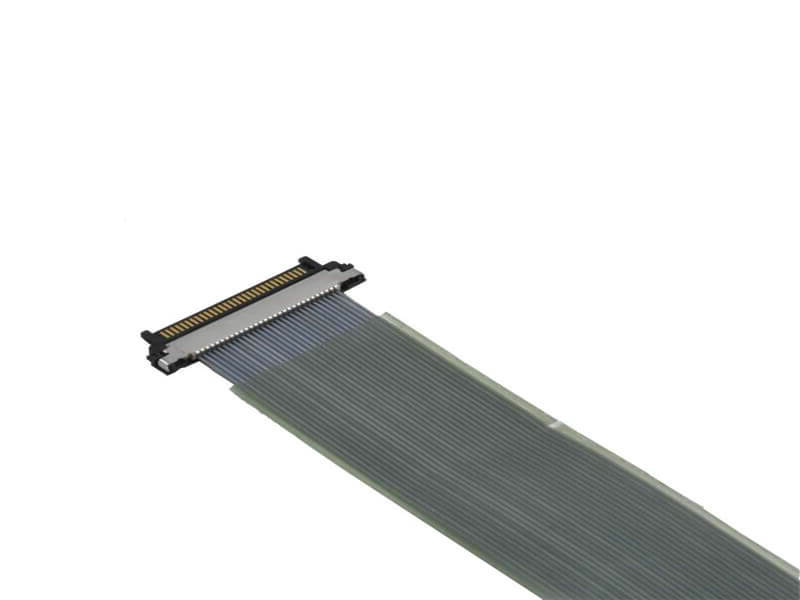
The New I-PEX 20380 micro coaxial cable assemblyis designed to address these challenges head-on. It’s a high-density, fine-pitch coaxial cable assembly that replaces bulky LVDS/MIPI ribbon cables in gimbal camera modules.
Key Features:
Connector:I-PEX MHF® 20380 series, featuring a 0.4mm pitch and a low-profile, robust housing for tight spaces.
Cable Construction:Ultra-fine coax (e.g., 40–46 AWG) with a controlled impedance, ensuring clean signal transmission for multi-gigabit video links.
Shielding:Full-coverage shielding with a drain wire to minimize EMI and maintain signal integrity in noisy environments.
Durability:High-flex, stranded conductors and a flexible jacket provide an excellent flex life, ideal for gimbal mechanisms.
Customization:Available in various lengths (e.g., 100mm, 150mm, 200mm) and pin counts to suit different gimbal and camera designs.
📊 I-PEX 20380 vs. Common Alternatives
Feature
I-PEX 20380 Micro Coax Assembly
Standard FPC/FFC Ribbon Cable
Generic Multi-Coax Harness
Signal Quality
Excellent for high-speed video (MIPI/LVDS) due to controlled impedance and shielding.
Prone to impedance mismatch and crosstalk over long distances.
Good, but performance varies with quality.
EMI Shielding
Superior 360° shielding.
Very limited shielding.
Good, but can be bulky.
Flexibility
Excellent for tight-radius, high-cycle bending (ideal for gimbals).
Industrial/automotive where space is less critical.
🛠️ Integration Tips for Engineers
When integrating the I-PEX 20380, consider the following:
Impedance Matching:Ensure your PCB traces, connectors, and cable are all designed for the same differential impedance (typically 100 Ω) to avoid signal reflections.
Connector Footprint:Follow the I-PEX 20380 datasheet precisely for PCB layout, including keep-out zones and solder mask openings.
Shielding & Grounding:Connect the cable shield to a solid ground plane on the PCB. Use multiple vias near the connector to minimize ground impedance.
Bend Radius:Avoid sharp bends. Follow the manufacturer’s minimum bend radius specification to prevent damage during flexing.
Strain Relief:Use clips, anchors, or glue to relieve mechanical stress from the connector, especially where the cable exits the gimbal housing.
Environmental Protection:For drones exposed to moisture or dust, consider adding strain relief boots or potting at the connector interface.
🎯 Ideal Applications
The I-PEX 20380 micro coaxial cable assembly is an excellent choice for:
Professional Aerial Photography Drones:For gimbals with 4K/8K cameras, zoom lenses, or multi-sensor payloads.
FPV Racing & Freestyle Drones:Where lightweight, high-bandwidth video links are crucial for low-latency FPV feeds.
Industrial Inspection Drones:For gimbals with thermal or zoom cameras that require stable, high-quality video transmission.
Handheld & Robotics Gimbals:Any application needing a small, reliable high-speed video link in a moving joint.
🏭 Partner with FRS for Your Cable Assembly Needs
If you are developing or manufacturing drone gimbals and need a reliable micro coaxial cable for drone cameraconnections, FRS is here to help.
With extensive experience in designing and manufacturing high-performance cable assemblies, FRS specializes in I-PEX micro-coax solutions. We offer:
Custom Design:Tailored cable assemblies based on your specific requirements for length, pitch, shielding, and flexibility.
Rapid Prototyping:Quick turnaround on samples to accelerate your development cycle.
Rigorous Quality Control:In-line and final testing to ensure every cable meets your performance and reliability standards.
Scalable Manufacturing:From small-batch prototypes to high-volume production runs.
Ready to optimize your drone gimbal camera performance?Contact the FRS team today to discuss your project requirements and discover how our I-PEX 20380 micro coaxial cable assemblies can enhance your design.
Forget Wi-Fi signals in the vacuum of space. Getting data from a rover on Mars, images from a telescope orbiting Jupiter, or commands to a lunar lander relies on a surprisingly fundamental technology: space-grade coaxial cable (coax)....
When setting up a CCTV system, choosing the right coaxial cable is crucial for ensuring optimal performance. Two commonly used cables in CCTV installations are RG6 and RG59. While they may look similar at first glance, there are signifi...
Coaxial cable assemblies are critical components in signal transmission systems, used widely in industries like telecommunications, aerospace, medical equipment, and industrial automation. Their performance largely depends on shielding—...
nternet Protocol Television (IPTV) has revolutionized how we consume media, delivering live TV, video-on-demand, and interactive content over broadband networks. While fiber-optic and Ethernet cables are often considered the gold standa...
In the world of signal transmission, Coaxial Cable Assemblies stand as a critical backbone, powering everything from home entertainment systems to industrial automation and aerospace communications. However, not all Coaxial Cable Assemb...
Venturing into the deep ocean is one of humanity’s greatest technological challenges. Deep-sea Remotely Operated Vehicles (ROVs) are our eyes and hands in these crushing depths, enabling scientific discovery, resource exploration,...
Micro coaxial cables are the tiny workhorses connecting high-speed data in devices like cameras, drones, medical equipment, and sophisticated electronics. While they seem fragile, proper storage significantly extends their lifespan, sav...
Coaxial cables are indispensable in modern communication, security surveillance, and broadcast systems, enabling stable signal transmission in homes, enterprises, and industrial sites. As manufacturers expand globally—penetrating market...
In industrial settings, data centers, and even residential electrical systems, managing a network of cables can quickly become a tangled challenge. Without clear identification, tracing a specific cable, troubleshooting issues, or perfo...
Coaxial cable assemblies are critical components in RF (Radio Frequency) communication systems, including wireless base stations, satellite terminals, radar systems, test equipment, and industrial IoT devices. Their performance directly...
In the realm of outdoor lighting systems, the selection of appropriate cabling solutions is a critical factor that directly impacts performance, reliability, and longevity. As outdoor lighting continues to evolve—from traditional street...
Micro-coaxial power lines pack impressive power transfer into tiny spaces. But pushing high voltages through these miniature channels creates a critical challenge: preventing dangerous electrical discharges and ensuring safe, reliable ...
In the high-stakes world of modern military operations, mission-critical communication is the cornerstone of coordination, intelligence gathering, and command execution. But what happens when a powerful electromagnetic pulse (EMP)...
Micro coaxial cables are the unsung heroes of modern military electronics. Packing powerful signal capabilities into an ultra-thin profile, they’re essential for everything from missile guidance systems and radar to ruggedized com...
Intermittent signal problems in micro coaxial cable systems are the bane of engineers and technicians. One moment the signal is pristine, the next it’s dropping packets, flickering, or full of noise – only to inexplicably return t...
In the dynamic landscape of the global cable and wire industry, industry forums serve as pivotal platforms for knowledge exchange, technology showcase, and business collaboration. Recently, FRS Coaxial Cables Factory made a striking pre...
That proprietary cable connecting your sleek smartwatch to its charger? It’s a micro-coaxial marvel, but also a common source of frustration when it frays, cracks, or stops working. Understanding how manufacturers test micro-coaxia...
Coaxial cable assemblies play a crucial role in signal transmission across various industries, from telecommunications and aerospace to medical equipment and consumer electronics. Among the key components determining their performance, ...
In the relentless push for smaller, faster, and more powerful electronics – from cutting-edge medical devices and aerospace systems to next-gen telecommunications and high-resolution imaging – high-density micro-coaxial cable bundles&n...
Voltage Standing Wave Ratio (VSWR) is a crucial measurement in radio frequency (RF) engineering. It tells us how efficiently RF power travels from a source (like a transmitter) through a cable to its destination (like an antenna) withou...
The global rollout of 5G technology has ushered in a new era of connectivity, demanding unprecedented levels of speed, latency reduction, and network flexibility. At the core of this transformation lies the 5G cloud Radio Access Network...
Attention all our valued customers and partners! Our factory hereby announces a price adjustment for coaxial cables, which will take effect from [specific date]. This adjustment is of great significance to your procurement plans, so ple...
The question of whether coaxial cable assemblies can be used in high-pressure environments is a critical one for industries ranging from oil and gas to marine exploration, aerospace, and industrial manufacturing. The short answer is yes...
Introduction
As urban centers evolve into smart cities, the demand for reliable, high-speed connectivity surges. Micro-coaxial networks emerge as a critical backbone, enabling seamless data transmission for IoT devices, 5G networks, ...
Aerospace telemetry systems serve as the “nervous system” of aircraft, spacecraft, and unmanned aerial vehicles (UAVs), transmitting critical data such as flight parameters, engine performance, and payload status in real tim...
In today’s interconnected world, coaxial cables serve as the backbone of critical communication, data transmission, and industrial control systems—powering everything from 5G base stations and data centers to subway communication networ...
Selecting the right dielectric material for micro coaxial cables is critical for high-frequency performance, reliability, and cost-effectiveness. Polytetrafluoroethylene (PTFE) and Polyethylene (PE) are the two dominant contenders. Unde...
Neural implant devices are transforming healthcare, enabling breakthroughs in treating neurological disorders, restoring mobility, and enhancing brain-computer interfaces. At the heart of these devices lies a critical component: custom...
When our factory’s coaxial cable was selected to be featured in the documentary *”Wires That Connect the World”*, it wasn’t just a moment of pride—it was a validation of the decades of dedication we’ve poured into crafting h...
Coaxial cable connectors and adapters play a crucial role in ensuring seamless integration of various electronic systems. Whether you’re setting up a home entertainment system, a professional audio – visual setup, or a telec...
In the harsh and demanding environment of marine operations, reliable communication and data transmission are critical for safety, navigation, and operational efficiency. Among the essential components enabling these functions are marin...
As new consumer electronics and network devices—such as 4K/8K smart TVs, 5G CPE routers, and 4K security cameras—become increasingly prevalent, many users wonder if their existing coaxial cables or newly purchased ones can work seamless...
In the era of angstrom-scale semiconductors and exploding data demands, SerDes (Serializer/Deserializer) technology stands as the backbone of high-speed connectivity for enterprise computing, AI, HPC, and hyperscale data centers. As ind...
Recently, our factory’s high-performance coaxial cable has been officially selected as a featured exhibit for the upcoming Shanghai International Industry Expo (SIIE) — a pivotal event that gathers top industrial brands, tech innovators...
5G carrier aggregation (CA) has emerged as a cornerstone technology to unlock the full potential of next-generation wireless networks, enabling higher bandwidth, lower latency, and seamless connectivity across diverse use cases—from urb...
The relentless evolution of robotics demands components that are not only powerful and precise but also adaptable and resilient. At the heart of this intricate dance of movement, sensing, and control lies a critical component often unse...
Imagine downloading a full HD movie in a blink, or medical scanners delivering crystal-clear images instantly during life-saving procedures. The relentless surge of data in our world – from streaming services and cloud computing to arti...
The manufacturing of coaxial cables involves complex processes with inherent risks, from high-voltage testing to mechanical operations. As industry regulations tighten and technological advancements emerge, manufacturers are adopting co...
In the world of outdoor electrical and communication setups, the significance of a reliable cable cannot be overstated. When it comes to harsh weather conditions, outdoor-rated coaxial cables emerge as the go-to solution for a plethora ...
As the shimmering horizon of 6G technology comes into focus, promising mind-boggling speeds (Terabit-level!), near-instant communication (ultra-low latency), and revolutionary applications like holographic telepresence and pervasi...
IntroductionIn today’s fast-paced digital world, reliable and high-speed data transmission is critical for industries ranging from telecommunications to aerospace. Enter High-Speed Data Micro-Coax—a cutting-edge miniature coaxial cable e.
KEL’s Micro Coaxial Cable solutions are at the forefront of modern electronic connectivity, offering exceptional performance in high-speed data transmission, miniaturization, and reliability. These connectors are integral to various.
Contact Us Micro Coaxial Cable factory-(FRS).
Feel free to reach out to us for any inquiries or orders