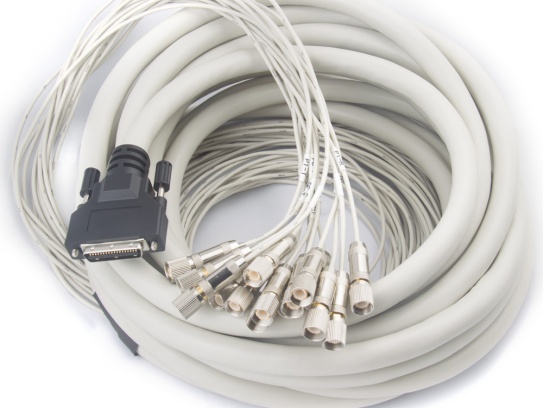
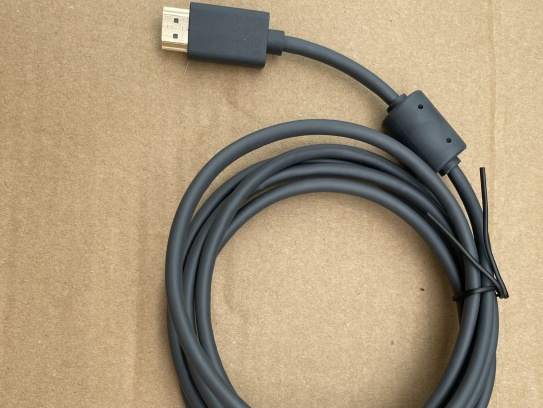
Coaxial cable assemblies are the backbone of countless industries, from telecommunications and aerospace to medical equipment and industrial manufacturing. They transmit high-frequency signals with minimal loss, making them indispensable for critical operations. However, like any mechanical or electrical component, coaxial cable assemblies can degrade or fail over time due to factors such as physical damage, environmental wear, connector issues, or signal degradation. When a failure occurs, businesses and technicians are faced with a critical decision: repair the existing assembly or replace it entirely. The answer hinges largely on cost—but cost is far more than just the price tag of parts or labor. It encompasses downtime, long-term reliability, performance risks, and even operational efficiency. In this article, we’ll break down the true cost of repairing coaxial cable assemblies versus replacing them, helping you make an informed decision that aligns with your budget and operational needs.
Understanding the Components of Cost: Repair vs. Replacement
To accurately compare repair and replacement costs, it’s essential to look beyond upfront expenses and consider the full lifecycle impact. Let’s break down the key cost drivers for each option.
Cost Drivers for Repairing Coaxial Cable Assemblies
Repairing a coaxial cable assembly typically involves diagnosing the issue, replacing faulty components (such as connectors, jackets, or inner conductors), and testing to ensure performance meets specifications. The primary cost factors here include:
- Diagnostic Labor: Before any repair can begin, technicians must identify the root cause of the failure. This may involve visual inspections, signal testing with network analyzers, or continuity checks. Diagnostic time can vary—simple issues like a loose connector might take minutes, while complex problems like internal signal leakage or conductor damage could take hours. Labor costs range from $50 to $150 per hour, depending on the technician’s expertise and the industry (e.g., aerospace technicians command higher rates than commercial AV technicians).
- Parts Costs: The cost of replacement parts depends on the type of assembly and the faulty component. Connectors (e.g., SMA, N-type, BNC) are relatively inexpensive, ranging from $5 to $50 each, while specialized connectors for high-power or high-frequency applications (like those used in radar systems) can cost $100 or more. If the cable jacket is damaged, replacing a section of cable might cost $2 to $10 per foot, depending on the cable’s gauge and material (e.g., Teflon jackets for high-temperature environments are pricier than PVC). For severe damage, such as a crushed inner conductor, parts costs could escalate, but they’re often lower than replacing the entire assembly.
- Repair Labor: Once the issue is diagnosed, technicians must repair or replace the faulty parts. This includes stripping the cable, soldering new connectors, re-insulating, and securing the jacket. Repair time varies based on the complexity—replacing a connector might take 30 minutes, while repairing a damaged cable section could take 1–2 hours. Labor costs here add another $25 to $100, depending on the task’s complexity.
- Testing Costs: After repair, the assembly must be tested to ensure it meets impedance, signal loss, and power-handling specifications. Testing equipment (e.g., vector network analyzers) is expensive, but many repair shops include testing in their labor fees. However, for critical applications (like medical imaging or military communications), third-party certification might be required, adding $100 to $300 per assembly.
- Downtime During Repair: While the assembly is being repaired, the equipment or system it powers may be out of service. Downtime costs can be substantial—for example, a telecommunications company might lose $10,000 per hour of network downtime, while a manufacturing plant could face $5,000 per hour in lost production. If repairs take several days (e.g., if specialized parts need to be ordered), downtime costs can quickly outweigh the savings from repair.
Cost Drivers for Replacing Coaxial Cable Assemblies
Replacing an assembly involves purchasing a new one and installing it. While this may seem straightforward, the costs include more than just the new assembly’s price:
- Upfront Purchase Cost: The cost of a new coaxial cable assembly varies widely based on length, specifications, and industry. A standard 10-foot commercial AV assembly might cost $20 to $50, while a 50-foot high-power assembly for industrial use could cost $200 to $500. Specialized assemblies—such as those for aerospace (with military-grade materials) or medical equipment (with biocompatible jackets)—can cost $1,000 or more. Volume discounts may apply for bulk orders, but single-unit replacements are often more expensive per unit.
- Installation Labor: Installing a new assembly requires removing the old one, routing the new cable, and connecting it to equipment. Installation time depends on the assembly’s location—replacing a cable in a desktop router might take 10 minutes, while installing a cable in a ceiling-mounted telecommunications rack could take 1–2 hours. Labor costs range from $30 to $120 per hour, similar to repair labor but often with less diagnostic time.
- Disposal Costs: Properly disposing of old coaxial cable assemblies is sometimes required, especially if they contain hazardous materials (e.g., lead-based shielding in older cables). Disposal fees range from $10 to $50 per assembly, depending on local regulations and the assembly’s size.
- Lead Time for New Assemblies: If the assembly is custom or specialized, lead times can be 1–4 weeks. During this time, the system may be down, leading to downtime costs similar to those associated with repairs. However, for standard assemblies, many suppliers offer same-day or next-day shipping, minimizing downtime.
- Long-Term Reliability Costs: New assemblies come with manufacturer warranties (typically 1–5 years), reducing the risk of premature failure. This can save money on future repairs or replacements compared to repaired assemblies, which may have a shorter lifespan if the root cause of failure (e.g., poor installation) isn’t fully addressed.
When is Repairing More Cost-Effective?
Repairing a coaxial cable assembly is often the better choice in specific scenarios where upfront costs and downtime are minimal. Here are the key situations where repair makes financial sense:
- Simple, Low-Cost Issues: If the failure is due to a loose or damaged connector, a small tear in the jacket, or minor signal leakage, repairs are quick and inexpensive. For example, replacing an SMA connector on a standard cable might cost $20–$50 in parts and labor, compared to $50–$100 for a new assembly. The savings here are clear, especially for high-volume deployments (e.g., a classroom with dozens of AV cables).
- Custom or High-Cost Assemblies: Specialized assemblies—such as those used in satellite communications, radar systems, or medical MRI machines—can cost thousands of dollars. Repairing these assemblies (even if parts are expensive) is often cheaper than replacing them. For example, a custom 100-foot high-frequency assembly for aerospace use might cost $2,000 new, but repairing a damaged connector could cost $300–$500, saving 75% or more.
- Minimal Downtime: If the assembly can be repaired on-site or with a short turnaround (e.g., 24 hours), downtime costs are low. For example, a retail store’s POS system coaxial cable might fail, and a technician can repair it in an hour, resulting in minimal lost sales. In this case, repair is far more cost-effective than waiting for a new assembly to ship.
- Short-Term Needs: If the equipment is scheduled for replacement in the next 6–12 months, repairing the cable assembly can be a stopgap measure to avoid investing in a new assembly that won’t be used long-term. This is common in industries with rapid technology turnover, such as consumer electronics.
When is Replacing More Cost-Effective?
Replacement becomes the smarter financial choice when repairs are costly, risky, or likely to lead to future issues. Here are the scenarios where replacement is preferable:
- Severe or Extensive Damage: If the cable’s inner conductor is crushed, the shielding is compromised, or the cable is damaged over a large section, repairs may be as expensive as replacement. For example, a 50-foot cable with 20 feet of damaged jacket and shielding would require extensive repair work, costing $150–$200, compared to $200–$300 for a new assembly. In this case, replacement offers better value and avoids the risk of incomplete repairs.
- High Downtime Costs: For critical systems where downtime is extremely costly (e.g., a data center’s backbone network or a hospital’s imaging equipment), waiting for repairs can be financially devastating. Replacing the assembly—even if it costs more upfront—can get the system back online faster. For example, a data center losing $50,000 per hour of downtime would save $100,000 by replacing a faulty cable in 2 hours instead of repairing it in 4 hours.
- Aging Assemblies: Coaxial cables degrade over time due to environmental factors (moisture, temperature fluctuations, UV exposure) or repeated bending. If an assembly is near the end of its lifespan (e.g., 10+ years old), repairing it may only delay failure. A new assembly with a warranty will be more reliable and reduce the risk of future downtime. For example, an old cable in a manufacturing plant that fails every 3 months would cost $150 per repair over a year ($600 total), while a new assembly costing $300 would save $300 and reduce headaches.
- Performance Requirements: If the system’s performance needs have changed (e.g., higher frequency signals or increased power handling), a repaired assembly may not meet the new specifications. Replacing it with a newer, better-suited assembly ensures optimal performance and avoids signal loss or equipment damage. For example, a telecommunications company upgrading to 5G might need coaxial cables with lower signal loss—repairing old cables won’t solve the performance gap, making replacement necessary.
Real-World Examples: Repair vs. Replacement Costs
To illustrate the cost comparison, let’s look at two real-world scenarios:
Scenario 1: Commercial AV System in a Conference Room
A company’s conference room AV system uses a 15-foot coaxial cable assembly (BNC connectors) to connect a camera to a projector. The cable fails due to a loose connector. Repair cost: $30 (parts: $10 for a new BNC connector, labor: $20 for 30 minutes of work). Replacement cost: $60 (new assembly: $40, labor: $20 for installation). In this case, repair saves $30 and is the clear choice.
Scenario 2: Industrial Manufacturing Sensor System
A manufacturing plant uses a 50-foot high-temperature coaxial cable assembly (SMA connectors) to connect a temperature sensor to a control panel. The cable’s jacket is melted in several places due to exposure to heat, and the shielding is compromised. Repair cost: $250 (parts: $100 for new jacket and shielding, $50 for new SMA connectors, labor: $100 for 2 hours of work, testing: $50). Replacement cost: $300 (new assembly: $250, labor: $50 for installation). While repair is slightly cheaper upfront, the new assembly comes with a 3-year warranty, reducing the risk of future failure. Given the plant’s $5,000 per hour downtime cost, replacing the assembly (which can be done in 1 hour vs. 2 hours for repair) also saves $5,000 in downtime. Replacement is the better long-term choice here.
The Hidden Cost of Poor-Quality Repairs or Replacements
Whether you choose to repair or replace, the quality of the work or the new assembly matters. Poor-quality repairs (e.g., using mismatched connectors or shoddy soldering) can lead to signal loss, intermittent failures, or even equipment damage. Similarly, low-quality replacement assemblies (e.g., thin shielding or inferior connectors) may fail prematurely, requiring additional repairs or replacements. These hidden costs—repeated downtime, equipment damage, and lost productivity—can far exceed the upfront savings of choosing a cheap option. That’s why it’s critical to work with a trusted supplier or repair provider that uses high-quality parts and follows industry standards.
Why Choose FRS for Your Coaxial Cable Assembly Needs
When it comes to coaxial cable assemblies—whether you need repairs, replacements, or custom solutions—FRS is your trusted partner. As a leading manufacturer with decades of experience in telecommunications, aerospace, medical, and industrial sectors, we understand the critical role that reliable coaxial assemblies play in your operations. Our commitment to quality ensures that every repair and every new assembly meets or exceeds industry specifications, minimizing the risk of downtime and hidden costs.
For repairs, our team of certified technicians uses state-of-the-art diagnostic and testing equipment to quickly identify issues and deliver long-lasting solutions. We stock a wide range of high-quality parts, including specialized connectors and cables, to reduce turnaround time and keep your systems running. For replacements, we offer a comprehensive line of standard and custom coaxial assemblies, designed for durability, performance, and value. Our custom solutions are tailored to your exact specifications—whether you need high-frequency, high-power, or environmentally resistant cables—with lead times that keep your downtime to a minimum.
At FRS, we don’t just sell or repair coaxial cable assemblies—we partner with you to find the most cost-effective solution for your unique needs. Whether repair makes sense for a simple connector issue or replacement is better for a critical, aging assembly, we provide transparent pricing and expert guidance to help you make the right decision. With FRS, you get the quality, reliability, and support you need to keep your operations running smoothly—now and in the future.